Last summer, astronomer Brad Tucker took a bunch of US university students outside to look at the night sky.
As they gazed up, Dr Tucker was asked to point out the Milky Way — that broad swathe of bright stars, comprising our galaxy, that crosses the sky.
He was surprised by the request because these were astronomy students.
“It’s not that they didn’t know what the Milky Way was,” Dr Tucker said.
“They had just never seen it.”
The students, from Portland, Oregon, were amazed to finally set eyes on the Milky Way in real life.Dr Tucker, who also works at Canberra’s Mt Stromlo Observatory, has seen similar reactions when taking children to see the Milky Way, especially those from Brisbane, Sydney or Melbourne.
“That’s never surprised me because kids like seeing all these new things.
“But university students who are studying in this field … it was really, I think, the first time my mind got blown by this concept of light pollution.”
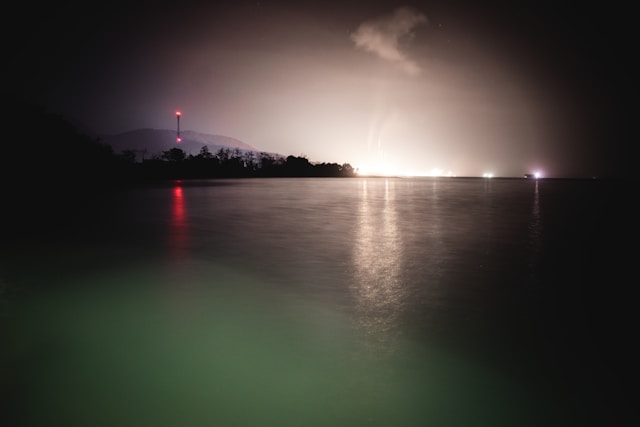
Light pollution occurs when “sky glow” — caused by light from artificial sources — is so powerful that it overpowers light emitted by stars.
How brightly the sky glows is related to the number, intensity and design of artificial lights.
“Imagine you have a little torch and you’re standing outside, and then you’re standing next to a car and the car turns on its headlights,” Dr Tucker said.
“You’re not going to see that torch.”In 2016, scientists estimated that about 80 per cent of people lived under light-polluted skies, with the Milky Way no longer visible to a third of us.
This means that the vast majority of us don’t see the night sky our ancestors did.
“It really takes me aback that we’ve lost this as a society, that there’s many people around the world, literally billions, who have not experienced that view,” Dr Tucker said.
“For as long as humans have been on this planet, that’s been part of our culture, our lives, our experiences, and we’ve wiped that out in little more than a century.”