
Artificial intelligence is changing how Australian businesses operate, make decisions and approach some of their biggest challenges. AI is opening up new possibilities while raising important questions about how the technology should be developed, adopted and governed.
As Australia moves into 2027, the conversation is increasingly shifting from what AI could achieve to how it can deliver meaningful results. Behind that progress are AI experts working to turn emerging technologies into practical solutions, helping organisations navigate the opportunities and complexities of an AI-driven future.
In this article, we highlight 10 Australian AI experts driving innovation in 2027, exploring their expertise, contributions, and the work shaping Australia’s place in the rapidly evolving global AI landscape.
Anthony Muscat and Simon Paul
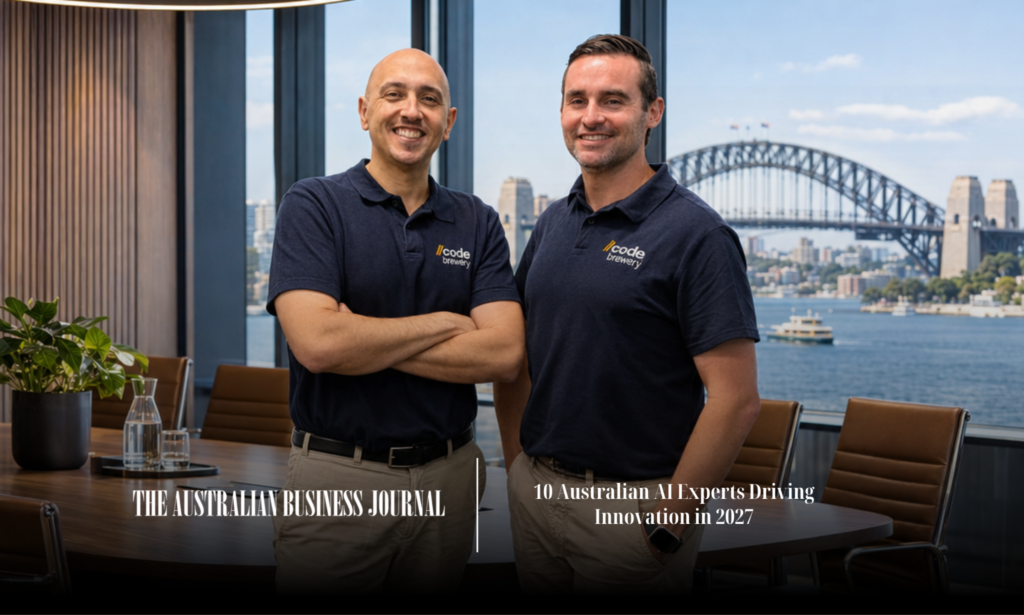
An impressive AI demo can quickly fall apart when it encounters real customers, messy data, and the demands of a working business. Anthony Muscat and Simon Paul have spent more than two decades building software that needs to hold up under those conditions, giving them a practical perspective on where AI fits.
Leading the team at Sydney-based software development studio Code Brewery, they specialise in websites, web applications and business system integrations. Their work has evolved alongside the technology, with the past two years bringing a growing focus on applied AI.
Anthony and Simon focus on connecting intelligent capabilities to the systems businesses already depend on. Through Code Brewery, they help organisations automate document processing, improve quoting workflows, develop customer-facing AI assistants and integrate automation into CRM, ERP and booking platforms.
Their approach reflects years of delivering production software. Code Brewery operates with an entirely senior, locally based team, allowing clients to work directly with the developers responsible for their systems. That continuity is particularly valuable when AI implementations require ongoing testing, monitoring and refinement, and it has earned a 4.9 Google rating from more than 70 reviews, Advanced Supplier status on the NSW Government ICT Services Scheme, and the highest available rating on the ProcessUnity Risk Index.
For Anthony and Simon, innovation comes from knowing when AI genuinely improves a process and when conventional software remains the better choice. Their focus is making emerging technology useful for all businesses, with reliability and measurable operational improvements guiding the work.
Joe Cozzupoli
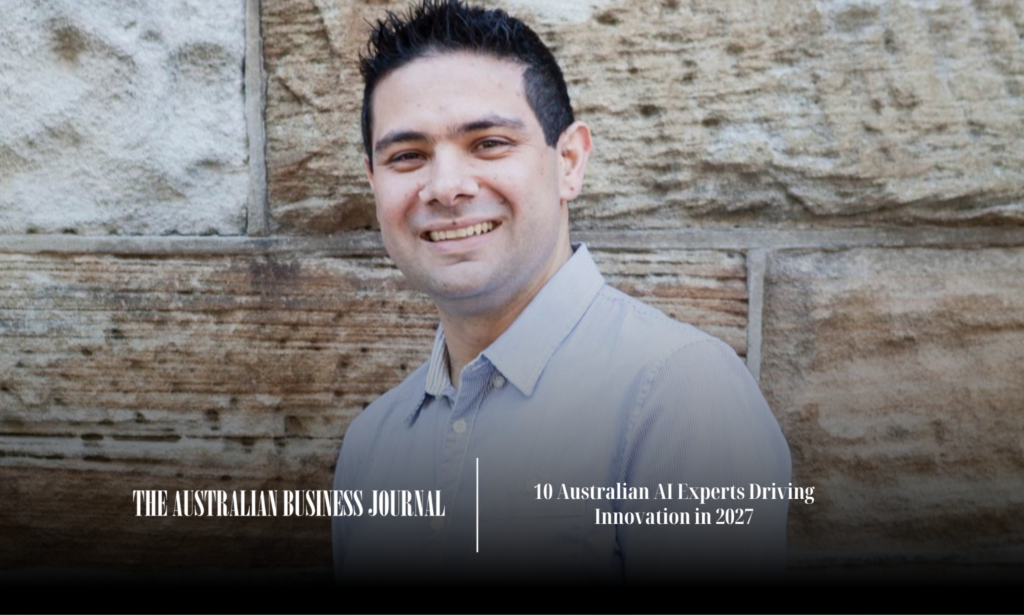
AI can open up entirely new ways of working, but every new capability also raises a question: who’s responsible when something goes wrong? Joe Cozzupoli has built his work around helping organisations answer that question before they rush too far ahead.
With more than 20 years across cybersecurity, technology strategy and risk, Joe has held senior roles with Microsoft, Cisco, Palo Alto Networks, Citrix and KPMG. His career has moved from technical security architecture into executive advisory, giving him a useful perspective on both what emerging technology can do and what organisations need to control.
That experience now informs his work in AI governance. An ISO/IEC 42001 Lead Auditor, Joe advises organisations on AI risk, governance and responsible adoption, with a focus on turning broad principles into controls teams can actually implement and demonstrate. He also builds and uses AI agents in security architecture engagements, keeping his perspective grounded in how the technology works in practice.
Through Silver Lining Cyber, the independent advisory practice he founded, Joe works across AI risk assessments, ISO/IEC 42001 readiness, cybersecurity strategy, security architecture and virtual CISO advisory. The common thread is connecting board-level questions around risk and accountability with what technical teams need to do on the ground.
Joe also serves as Global Ambassador and Australian Chapter President of the Global Council for Responsible AI and contributes to industry publications.
As AI adoption grows, the Silver Lining Cyber team is helping businesses innovate without treating security, governance, and accountability as problems to solve later.
Bruce Mullan

For decades we’ve been promised a technology solution to rid the world of professional drudgery. Now AI is finally here. But what if the antidote becomes worse than the cure? Confident wrong answers, sensitive data breaches, unfair discrimination, and nobody accountable. Bruce believes AI can change the world for the better and isn’t about to let the lack of AI governance ruin the moment.
Bruce’s career began at PwC in New York and has taken him across 17 countries, leading technology transformations and implementing complex business systems. Through his previous consultancy, The Purpose Driven Group, he worked with more than 40 purpose-driven organisations, particularly in health, disability, ageing and human services. You could say he’s had a front-row seat to the way technology has changed how people care for others.
Bruce could see AI was moving so quickly, but organisations need a way to make it safe, useful, and manageable. And that’s why he started AI Governance Partners to offer fractional AI governance expertise to help health care and community organisations embrace AI without losing control of it. Bruce brings decades of technology, delivery, and risk experience to a simple challenge: making sure AI delivers on its promise without introducing unintended consequences. Bruce’s mission: Make AI safe for people who care.
Bruce ensures AI governance is practical, engaging, and focused on business value. After all, AI governance should provide the guardrails that let health providers confidently adopt AI and provide better care. The opportunity is too important to get wrong.
Bridget Davidson

Some of the most important conversations in sales never make it into the company records. They happen over coffee, during site visits, or in the middle of a busy working day, when taking notes or recording a discussion isn’t always practical. Bridget Davidson knows how much valuable information can disappear between those conversations and the next CRM update.
With more than 20 years in enterprise sales across technology, pharmaceuticals and medical devices, Bridget has experienced that problem firsthand. Her career, including roles with global SaaS companies, has given her an understanding of how salespeople work and why administrative systems often struggle to keep up.
That experience led her to establish Brisbane-based Debrief Global, where she’s developing an AI-powered platform designed around face-to-face selling.
The concept is straightforward: after a customer meeting, a salesperson records a 60-second voice debrief. The platform converts that account into structured notes and CRM updates, while bringing follow-up tasks, pipeline information and forecasting into one application.
For businesses, the potential value extends beyond reducing paperwork. More consistent customer information could help managers identify emerging deal risks, understand pipeline movements and make better-informed revenue decisions.
With pilots commencing and a launch targeted for early 2027, Bridget is also developing an AI intelligence layer intended to provide deeper insight into sales activity and commercial momentum.
Her approach reflects a practical understanding of where AI can help sales teams: capturing information while it’s fresh, reducing the administrative burden, and giving businesses a clearer picture of the customer relationships driving their revenue.
Kevin Kwok

Buying an AI subscription is easy. Getting an entire business to change how it works is another matter. Kevin Kwok sees that gap as one of the biggest challenges facing organisations trying to make something useful out of the technology.
As Commercial Partner of Sentry AI, Kwok is focused on helping businesses move beyond experimenting with tools like ChatGPT, Claude and Copilot and start incorporating AI into their everyday operations. He believes AI offers an opportunity to rethink how businesses operate, particularly by giving people greater capacity to make decisions, solve problems and focus on valuable work.
That thinking led to the development of Sentry AI, an agentic operating system designed to connect a company’s existing technology, data and workflows. Rather than asking businesses to abandon the tools they’ve already invested in, the platform helps them build AI-powered processes around how their teams actually work.
Its services span AI deployment, custom integrations, role-specific agents, workflow development and adoption monitoring. A central feature is Sentry Brain, which brings organisational knowledge and AI activity into one place, giving employees access to information while helping leaders understand how the technology is being used.
Kwok’s approach also places considerable emphasis on human oversight. With AI agents increasingly capable of completing tasks independently, he argues that businesses need systems that make their work visible, manageable and accountable.
For Kwok, the real opportunity is what happens after a company adopts AI and how that investment is made useful across the organisation, so the technology improves how people work rather than becoming another collection of disconnected tools.
Merissa Boey

There’s no shortage of AI software promising to make businesses faster, smarter or more efficient. The harder part is figuring out which products are worth considering, especially when new providers and technologies seem to appear every week.
Merissa Boey is tackling that problem through SICONICA, a Melbourne-based global AI software discovery platform she founded and leads as CEO. Her focus is on making an increasingly crowded technology market easier to navigate, while giving software companies a better opportunity to reach potential customers.
Merissa’s approach addresses a challenge on both sides of the market. Businesses looking to adopt AI often face unfamiliar providers, competing claims, and limited information about how different solutions compare. Meanwhile, smaller or emerging technology companies can struggle to gain visibility beyond their existing networks, regardless of what their products offer.
SICONICA brings those two groups together. The platform allows AI software and technology providers to showcase their products, while prospective customers can explore available solutions and consider user reviews alongside company information.
Rather than developing another AI tool, Merissa is working on the infrastructure around technology adoption: how people discover products, assess their relevance, and make more informed choices.
With SICONICA looking towards a broader global audience, her work reflects an important part of AI innovation that can be easily overlooked. As the market expands, helping businesses find and evaluate the right technology may become as valuable as developing the technology itself.
Dom Jocubeit

A farm can generate mountains of paperwork before a single product reaches the market. Employee records, compliance documents, buyer invoices, and settlement reports all contain information businesses need, but making sense of it can take hours of manual work. Dom Jocubeit sees an opportunity for AI to change that.
As owner of Beacon & Stone, Dom focuses on applied AI, software engineering and governance, particularly in environments where accuracy, privacy and accountability matter. His approach starts with understanding how an organisation operates before deciding where automation can make a practical difference.
That thinking is already shaping projects in Australian agriculture. For Qualipac Farms, Beacon & Stone is developing a workforce platform that uses intelligent document processing to support onboarding and compliance. For Moira Farming, the business is building a commercial reconciliation system that extracts and standardises information from invoices and settlement documents.
Behind these projects is the Hypermodern Platform, which Beacon & Stone holds early implementation licensing for in the Asia-Pacific region. It provides a foundation for connecting data, workflows, AI agents and governance, reducing the need to build every solution from scratch.
Dom’s work also draws on governance, risk and compliance expertise, with an emphasis on keeping evidence traceable and people responsible for important decisions. The business applies similar discipline to research and development, documenting experiments, technical uncertainties and outcomes.
Looking ahead, Beacon & Stone is exploring predictive farming applications built on local agricultural data. For Dom and his team, AI’s potential lies in solving the operational problems businesses already face, while giving them greater confidence in the information guiding their decisions.
Santhosh Kumar Edukulla
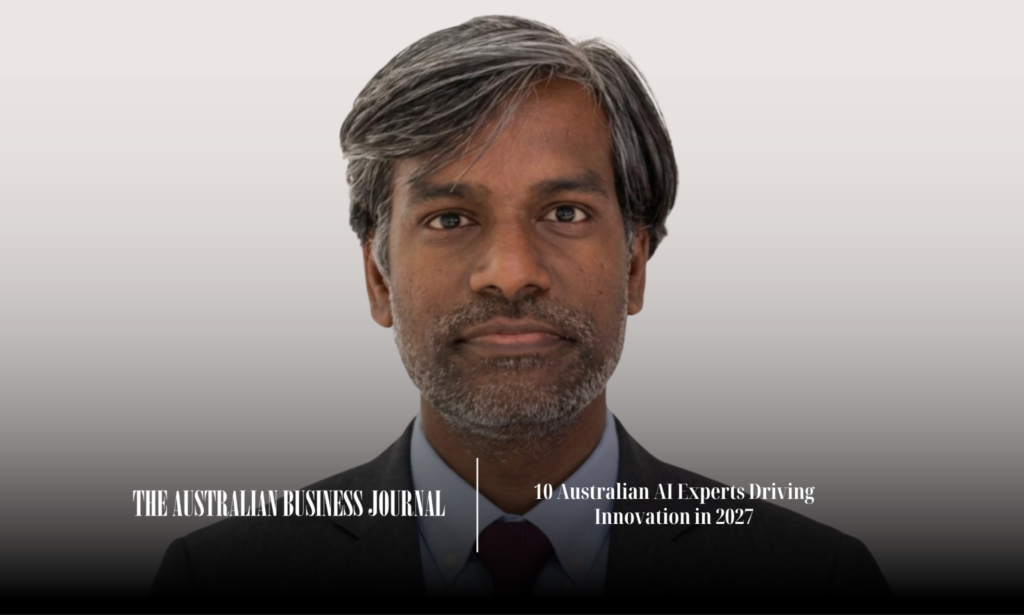
Santhosh Kumar Edukulla understands what it takes to build technology that millions of people rely on. With over two decades of experience at leading technology companies, including Google and Amazon, he is now helping enterprises adopt AI securely, responsibly, and at scale.
His career spans 24 years in software and security engineering leadership, from hands-on development to leading organisations of over 100 engineers. At Google, he led multiple engineering teams across multiple regions, focusing on distributed systems, storage, infrastructure, cloud networking, and security. At Amazon, he helped architect and deliver network management and replication technologies supporting critical applications across multiple regions.
Drawing on this experience, Santhosh founded CorpAI to help enterprises transition from traditional digital systems to AI-native environments. His focus is on enabling organisations to innovate confidently while ensuring their AI systems remain secure, governed, and manageable as adoption scales.
CorpAI develops infrastructure that enables organisations to securely manage the AI lifecycle, including the administration, Governance, Risk and Compliance of generative AI applications and AI Agents. CorpAI provides an AI Gateway, security and governance controls, Agent and MCP directories, administration and permission management, security scanning, AI visibility and Ops, policy management, cost management capabilities.
As organisations increasingly adopt AI, maintaining visibility and control becomes essential. CorpAI helps enterprises understand AI usage, manage access to sensitive information, enforce security policies, and establish safeguards across their AI ecosystems. Any IT organization intend to adopt AI, needs CorpAI.
Santhosh’s experience building secure, complex, large-scale infrastructure informs CorpAI’s approach to enterprise AI.
Luke Gardiner & Peter Cardassis
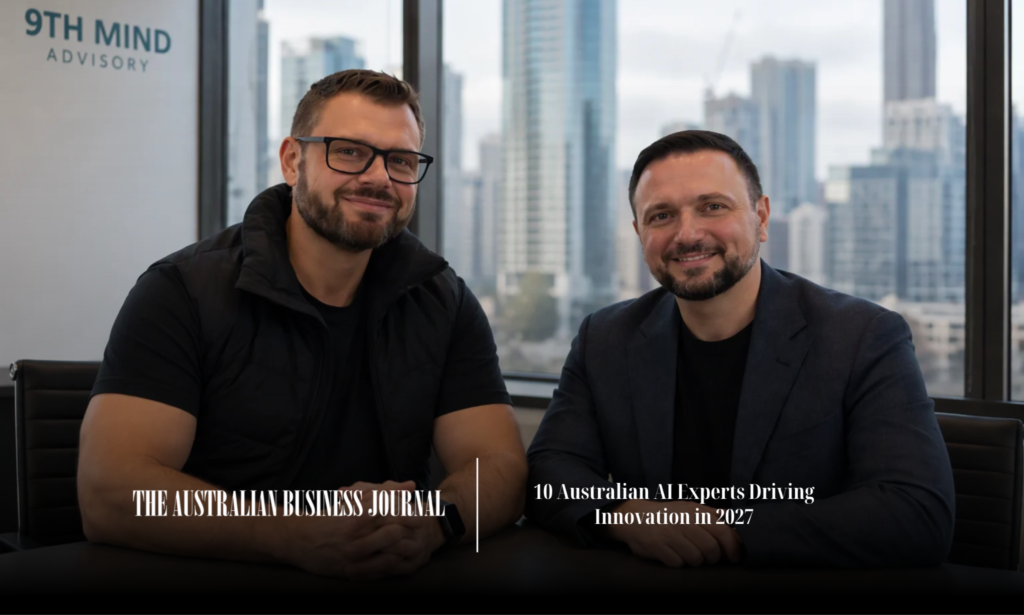
There’s a big difference between introducing new technology and making it work safely inside a complex, regulated business.
As Directors of 9th Mind Advisory, Luke Gardiner and Peter Cardassis work with strategic technology and delivery partners to help their customers navigate that challenge. Their focus spans cybersecurity, data and operational resilience, AI, automation and enterprise architecture, bringing these disciplines together around the outcomes the business needs to achieve.
9th Mind’s approach starts with the evidence, risk and required business outcomes, not the technology stack.
By understanding what the organisation needs to protect, improve, demonstrate or recover, Luke and Peter help establish the requirements that should drive technology and investment decisions.
From there, 9th Mind brings a deep understanding of how technology can address those requirements. Working alongside strategic partners and their customers, they help translate business and regulatory needs into practical architectures, services and technology outcomes that can be implemented and sustained.
This is particularly important across regulated industries and critical infrastructure, where organisations need to demonstrate that security, governance, resilience and accountability are built into their operations, rather than added after the technology has been selected.
For 9th Mind, the opportunity is not simply to introduce new technology. It is to enable strategic partners and their customers to make evidence-led technology decisions that deliver the outcomes the business requires, while remaining secure, resilient and ready for what comes next.
Angus Paterson

Kim Allison and her co-founder Angus Paterson have built a global membership platform with more than 140 screens, integrated payments, and AI-powered operations. What makes that particularly interesting is that they did it themselves, without hiring a development team.
It’s a practical example of how AI is changing what’s possible for entrepreneurs, and one that sits at the heart of Global Playground, the founder community they established in Perth.
Kim and Angus created Global Playground around a simple observation: building a business can be lonely, and other founders often understand the challenges better than anyone else. Their community brings entrepreneurs together through curated, in-person gatherings in cities around the world, with a digital platform designed to keep those relationships going between events.
Behind the scenes, the business operates with a remarkably lean setup. The founders built their membership platform using Base44, organising it around four pillars: Gather, Spotlight, Banter and Evolve. They also use AI agents through Claude Cowork to manage daily operations, alongside AI-assisted workflows that produce and distribute content across three platforms every weekday.
For Angus, the experience demonstrates how founders can use emerging technology to build and operate sophisticated businesses with fewer resources.
That thinking extends to the membership experience itself. Global Playground offers member directories, forums, messaging, and a concierge service to help founders develop meaningful connections.
While AI supports much of the business infrastructure, the community remains deliberately human. Angus’s work shows how technology can handle the operational complexity while founders concentrate on the relationships that make their businesses worthwhile.
Disclaimer: The content in this article is provided for general informational purposes only and reflects publicly available or contributor-supplied information about the featured individuals and organisations. This is a paid branded content feature, and some or all of the profiles included were created in collaboration with those featured. The list is not ranked, is not exhaustive, and does not constitute an endorsement or independent assessment of any individual, company, product or its capabilities. Any descriptions of technology, capability or results are contributor-supplied and have not been independently tested or verified. Readers should make their own enquiries before making any business, technology or procurement decision.