


This article is a branded editorial feature highlighting Australian leaders using AI to drive innovation and impact.
While most of the AI world is busy making promises, a group of Australian practitioners is quietly delivering results. These aren’t the evangelists or the futurists—they’re the problem-solvers building solutions that actually work for real businesses.
Today, we’re spotlighting the leaders who’ve moved beyond AI theory to practical application. Discover how they’re cutting through the noise to solve genuine business challenges, and what sets them apart in a market saturated with hype.
Sam Robertson

Sam Robertson spotted what others missed: businesses don’t need AI evangelism; they need AI that works.
After years in software, Robertson launched Amavis with a deliberately different approach. Whilst competitors promise transformation, he delivers automation. No jargon and no year-long roadmaps, just practical workshops that build custom solutions immediately.
The timing is perfect. Australian AI investment will exceed $3.6 billion by 2025, growing at 24.4% annually. The Tech Council identifies AI as 2025’s most influential technology trend, with 40% of SMEs now adopting AI tools, a 5% quarterly increase. Yet most businesses remain stuck in AI limbo: curious but paralysed by complexity.
Robertson built Amavis for companies too sophisticated for simple tools but too lean for enterprise-grade implementations requiring massive budgets. His workshop-first approach strips AI to essentials: creating time, reducing friction, and building momentum. Robertson’s software background provides enterprise-grade technical knowledge, whilst his Australian focus ensures solutions match local business realities.
While global consultants dominate enterprise projects and smaller firms focus on individual tools, Amavis occupies the middle ground: substantial enough for complexity, nimble enough for speed, and that makes a big difference for clients.
Australian businesses face particular challenges: distance from tech hubs, limited local expertise, and economic uncertainty. Robertson addresses these with immediate solutions rather than multi-year transformations.
As a result, his 2025 prospects look strong. AI adoption accelerates whilst cost pressures favour targeted implementations over comprehensive transformations. The National AI Centre reports businesses want faster data access and stronger security, exactly what Robertson delivers through Amavis.
Enod Bataa

Australian businesses lose $2.3 billion annually to repetitive admin tasks that could be automated in minutes. After watching a $50 billion S&P corporation spend six months implementing a simple workflow that could be built in a few days, former McKinsey QuantumBlack data science consultant Enod Bataa realized the AI revolution was leaving everyday businesses behind.
In 2023, Enod founded Mazaal AI with a radical premise: describe your most annoying business tasks in plain English, and the platform builds the automation instantly. No coding, no consultants, no complexity. What makes this revolutionary isn’t just the conversational interface—it’s the “agentic” intelligence that creates AI employees who seamlessly integrate with existing business tools, understand context, make decisions, and know when to ask for guidance.
Backed by NVIDIA and the NSW government, Mazaal AI is proving that sophisticated automation doesn’t need to be intimidating—it just needs to understand how real businesses actually work. Enod’s vision extends beyond saving time: he’s ensuring every Australian business can compete with the operational efficiency of tech giants.
Roni van der Fehr

Roni van der Fehr isn’t chasing the next shiny thing in AI; he’s grounding it in something most businesses still struggle with: making smart decisions at scale. By day, he’s a senior portfolio analyst at Powerlink Queensland, helping navigate risk and ensure the delivery of large-scale programs stays aligned with long-term value. But behind the scenes, he’s working on something more ambitious: reimagining what assurance looks like in an AI-enabled world, not in theory, but in practice.
Through his startup, Protego AI, Roni is building an AI-powered digital assurance agent that plugs into the everyday tools PMOs already use, like Microsoft 365, and does the heavy lifting. It reviews documents, flags governance gaps, tracks follow-up actions, and keeps a real-time pulse on delivery health. What makes Protego different is its roots in real delivery work. Roni’s not just an AI guy dabbling in project management; he’s spent decades inside programs where things go right, and very often, where they don’t.
Roni also writes a monthly newsletter, PMOxAI: The Hard Truths, where he unpacks what it really takes to make AI work in the delivery space. No buzzwords or inflated promises, just candid reflections on things like risk, change, and benefits tracking, and how automation can support, not sideline, the people doing the work.
Where most AI tools for project delivery fixate on prediction, Protego AI aims for accountability. It’s an automation layer grounded in frameworks like PRINCE2 and Agile Assurance, designed not to replace humans, but to make governance scalable and less reactive.
Nikhil Singh
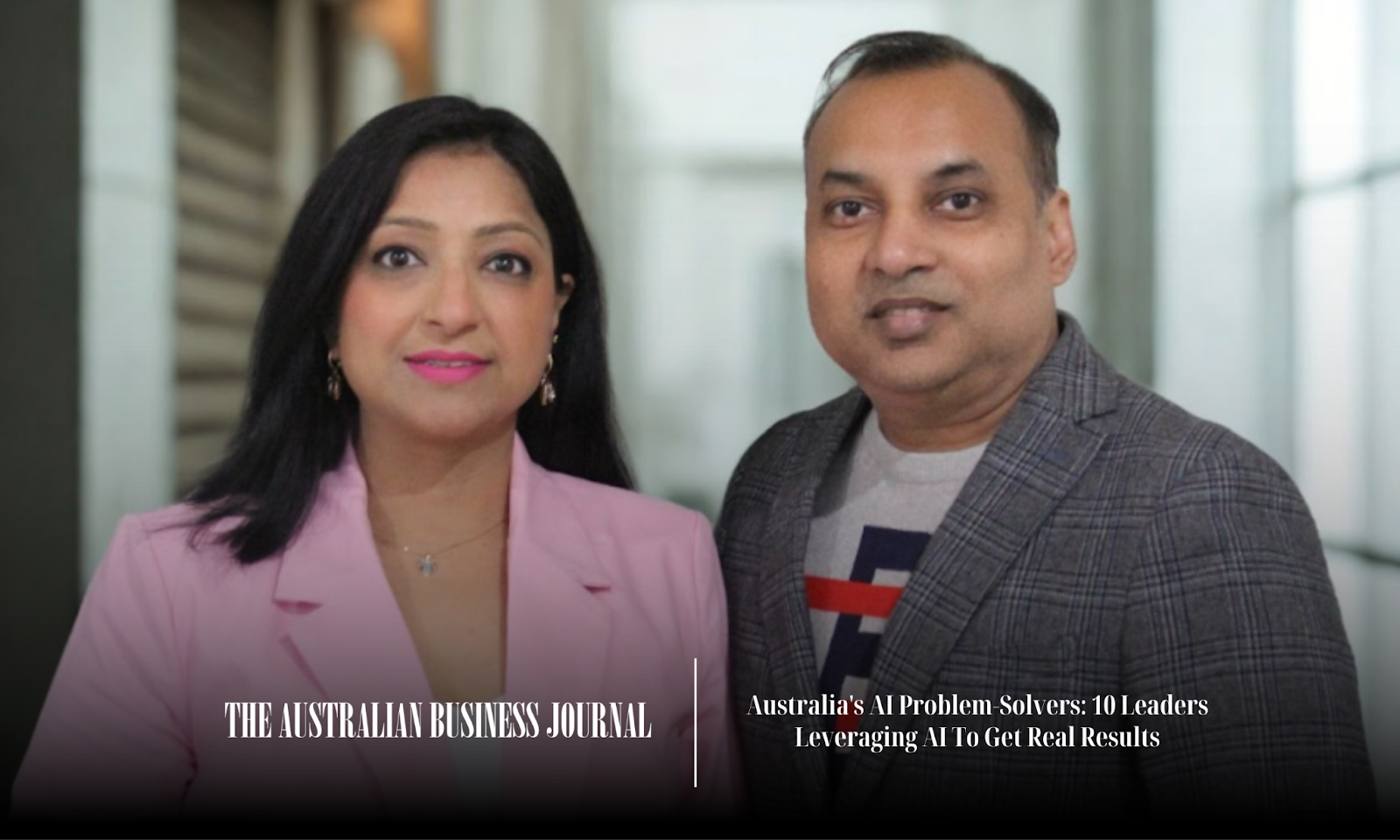
While corporate Australia continues to debate AI strategy in boardrooms, Sydney-based entrepreneur Nikhil Singh has been quietly solving the automation puzzle for over two decades. As co-founder of AI2Easy, Nikhil is taking a decidedly different approach to artificial intelligence, one that prioritises practical application over technological showmanship.
Working alongside his wife, Garima Singh, whose 20-year IT background spans business management and innovative technology implementation, the duo has built AI2Easy around a deceptively simple philosophy: automation should enhance workflows, not complicate them.
The company’s flagship products demonstrate this thinking in action. Deciphr AI transforms a single piece of raw content, whether audio, video, or text, into more than 75 marketing assets instantly. The platform eliminates the traditional bottleneck of manual content creation, delivering immediate value without requiring teams to master complex prompting techniques or hire additional creative staff.
Meanwhile, Strata AI addresses a distinctly Australian challenge: the time-intensive world of property reporting. The platform compresses hours of document analysis into minutes while improving accuracy rates, a practical solution for an industry where precision and efficiency directly impact the bottom line.
“We’re not chasing the latest AI trend,” Singh explains. “We’re building tools that solve real operational challenges for businesses in growth mode, the kind of scaling problems that keep founders awake at night.”
For AI2Easy, success isn’t measured in technological sophistication but in operational relief, helping growing businesses automate the processes that become painful at scale. That focus on growth-stage pain points rather than broad-market appeal may prove to be the smartest strategy of all.
Marrin-Boyd Andrews
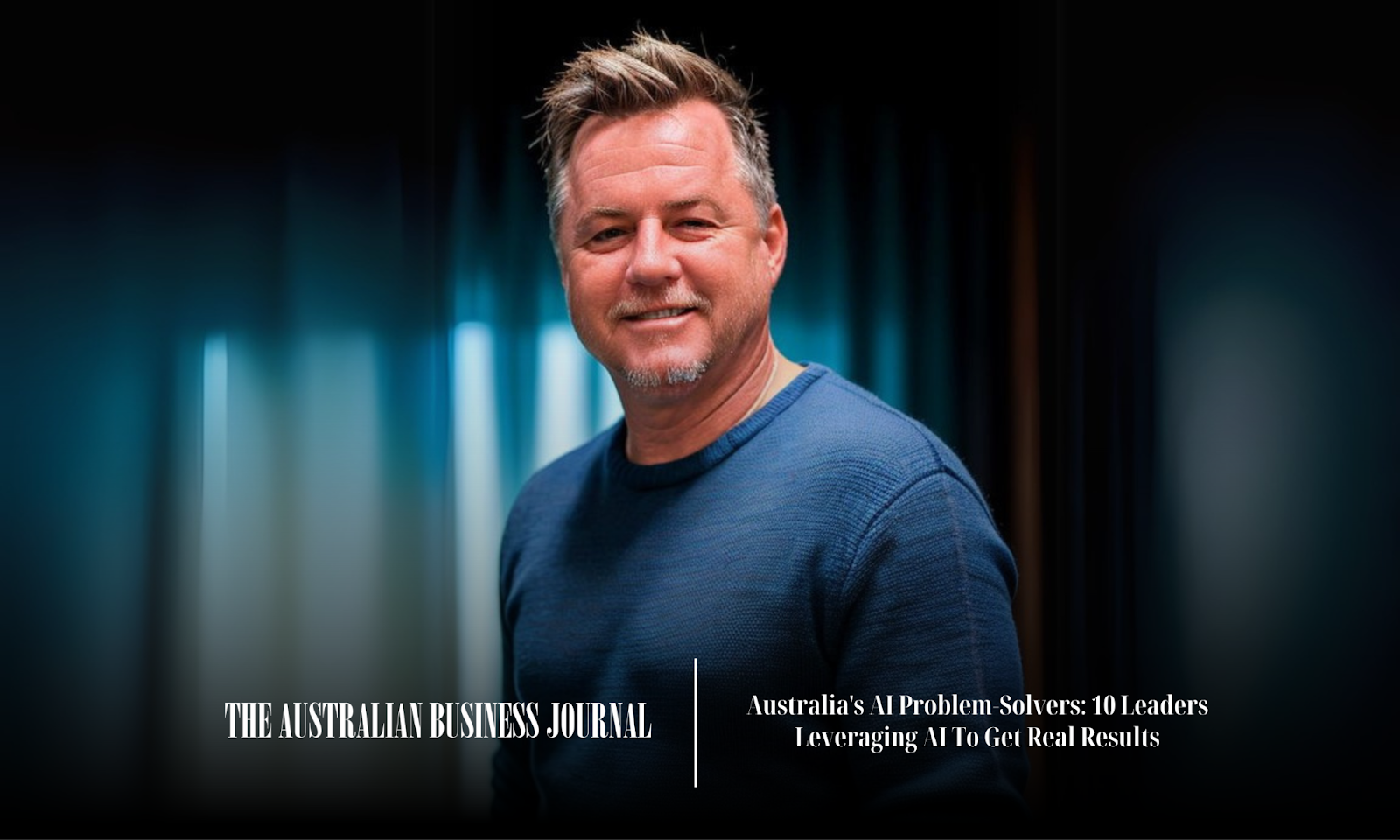
Marrin-Boyd Andrews has built a reputation as a transformational talent leader with an uncommon ability to turn emerging technologies into practical solutions. Over nearly two decades, he has held senior roles across global enterprises, consistently challenging conventional thinking about how talent systems should work. Today, his focus has narrowed to a singular mission: helping organisations operationalise AI, particularly prompt engineering, to create more agile, data-driven, and effective talent functions.
While the promise of generative AI has been widely heralded, Marrin-Boyd has seen firsthand how often the reality falls short of the hype. In many organisations, AI initiatives never move beyond experimentation. Recognising this gap, Marrin-Boyd created ProPrompt, a purpose-built platform that translates the complexity of prompt engineering into a structured, accessible solution for talent and HR teams.
Unlike generic AI platforms, ProPrompt was designed from the ground up to meet the needs of professionals in sourcing, workforce planning, market intelligence, and employer branding; domains that often lack specialised AI capabilities. At its core, ProPrompt is a prompt engineering platform designed for people who never intended to become prompt engineers.
It offers a library of pre-built prompts developed around proven recruitment and workforce use cases, each with clear guidance for implementation. Underneath every prompt sits a framework of configurable variables for precise customisation, modular components that can be stacked together into end-to-end workflows, and embedded instructions that make adoption frictionless.
This structured yet flexible approach reflects Marrin-Boyd’s philosophy: that the most powerful technology is the kind people will actually use.
Christopher Nugent and Clancy Brodrick

Christopher Nugent and Clancy Brodrick didn’t build We Lead Out to chase the AI hype. They founded it after years leading large-scale Salesforce transformation programmes, including deep work across public sector and education. Again and again, they saw the same issue: AI was being talked about a lot, but almost never used to drive real delivery. Instead, organisations were sold roadmaps that never shipped and flashy decks that looked good but masked the absence of execution. So they built something else.
We Lead Out is one of the first AI-native consultancies in Australia, designed from the ground up to embed agentic capabilities into its operating model. That means generative AI and autonomous agents are more than talking points; they actively power delivery. These systems let the team move faster, start engagements earlier, and sidestep the slow, overhead-heavy models others rely on. It’s also one of the first to bring together serious Salesforce and Agentforce expertise inside a delivery model that’s lean, fast, and focused on quality outcomes.
The team doesn’t run bloated processes. They run tight cycles, automate wherever they can, and focus on what matters: outcomes that last. This focus on tangible results is what makes We Lead Out different. Nugent and Brodrick bring a rare blend of hands-on Salesforce delivery and AI-native strategy, and they understand how to embed intelligence into the systems organisations already use, without adding strain or complexity.
We Lead Out isn’t theorising about the future of AI delivery. It’s building it, using it, and shipping it in every engagement.
Dr. Anna Harrison

Most founders don’t wake up in the morning thinking, “I can’t wait to optimise my customer journey.” And that’s exactly who Dr. Anna Harrison built RAMMP for. With a background that straddles architecture, tech, and behavioural science, Dr. Harrison doesn’t just understand digital dysfunction; she reverse-engineers it. Her work focuses on fixing the broken relationship between businesses and the people they’re trying (and failing) to convert. The ADORE Process™, her patented six-step system, reads more like therapy than marketing. And that’s by design.
RAMMP diagnoses the unseen problems most B2B companies don’t realise they have: trust gaps, unclear value, customer journeys that collapse halfway through. Dr. Harrison’s approach is powered by AI, but rooted in human behaviour. RAMMP’s tools don’t just report on performance; they also identify the psychological blockers, the emotional exits, and the moments your website gets ghosted to find solutions.
What makes Dr. Harrison’s model work so well is who it’s built for: founders in sectors like tech, tourism, and trade who don’t have time for marketing games. They’ve been burned by agencies, underwhelmed by dashboards, and are deeply allergic to fluff. RAMMP meets them where they are, with a system that simplifies, audits, and automates the path to higher conversions. For businesses tired of throwing money at strategies that don’t convert, RAMMP offers marketing that finally makes sense.
Cara Cunningham

Small business owners are expected to wear every hat: strategist, salesperson, content creator, and analyst, but when it comes to marketing, most are flying blind. CEO Cara Cunningham identified this as a commercial opportunity to make marketing accessible to non-marketers, through an AI-powered software product tailored to the needs of small business. After years leading marketing strategy for property and lifestyle brands, and watching SMBs throw thousands at digital campaigns that barely moved the needle, she built something different, alongside her co-Founders Hoang Cat and Paul Tran. Campaign Trail is their answer to an issue no one seemed to be solving: how do you give non-marketers access to the kind of high-performance, multi-channel marketing that actually drives business growth?
The answer isn’t more tools, but rather fewer, smarter tools. Campaign Trail rolls strategy, content, automation, and analytics into a single, AI-powered platform designed to work with minimal input and no prior experience. Users don’t need to understand funnel metrics or creative testing to use it; they just need to tell it what their business goals are, and it builds the strategy, content, and a detailed delivery plan for the next twelve months. What would take a marketing agency weeks happens in under 15 minutes. And because it’s built on a machine learning engine and trained on years of real campaign data, the outputs are targeted, measurable, and built to improve over time.
This makes Campaign Trail a complete and understandable AI solution for the overwhelmed business owner trying to grow without overspending.
Kara Bombell
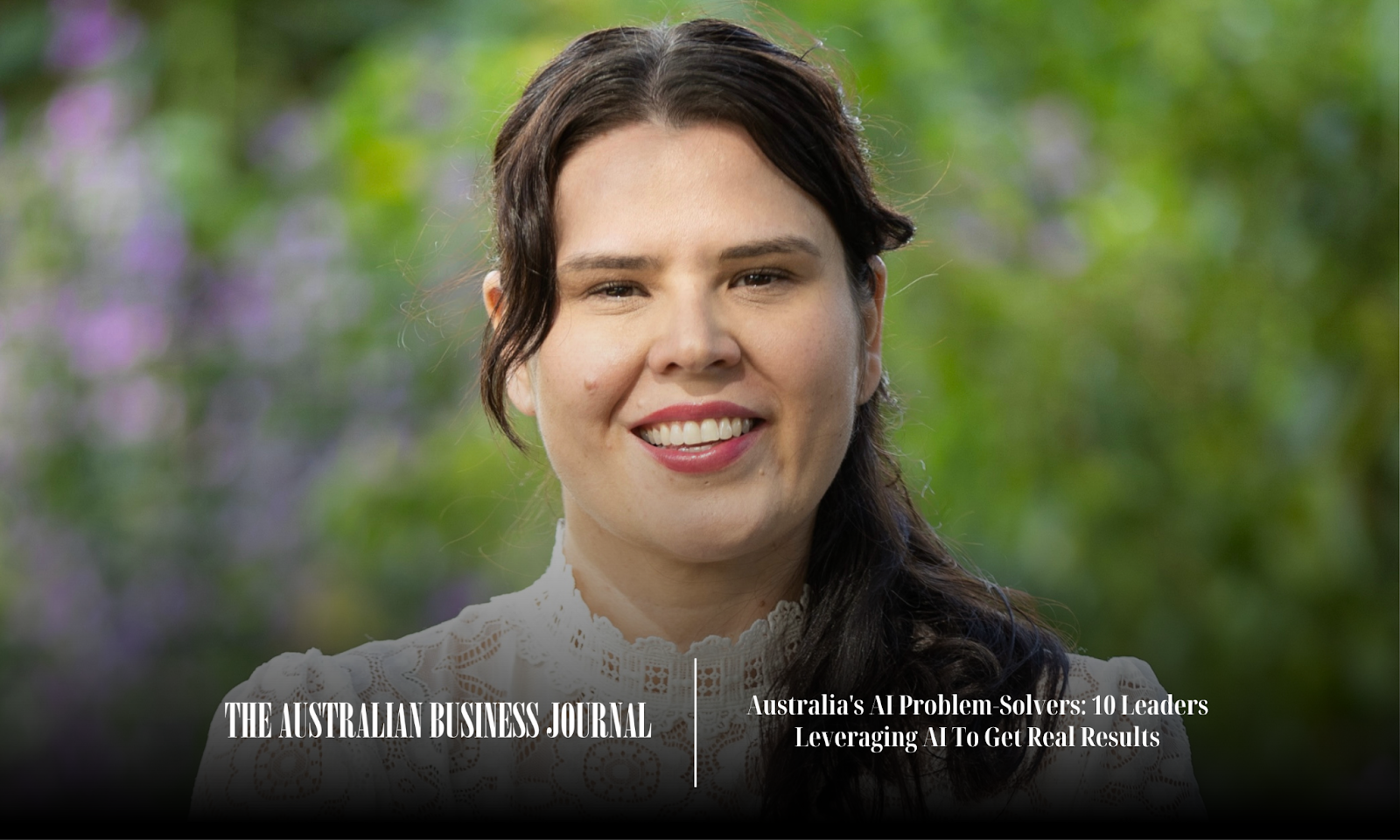
Kara Bombell doesn’t peddle AI hype or hollow ethics. As cofounder of EthicAI, she delivers human-first strategies that unlock productivity, scale talent, and sharpen the bottom line. Her focus is on the real work: preparing people for change, redesigning how teams operate, and ensuring the tech actually drives better outcomes, not burnout. That’s where culture-first becomes a competitive edge.
EthicAi exists for leaders who are done with transformation theatre. It’s a consultancy built around modular, practical frameworks that meet organisations where they are; whether that’s overhauling a creaky process, designing guardrails around data use, or upskilling teams to work with AI symbiotically. Kara and her co-founder, Katriel Healy, dig into operational blind spots, cultural gaps, and infrastructure flaws to lay the groundwork for long-term capability. The 2025 Ethical AI Benchmark, designed in-house, is one example. It’s already being used to influence procurement and policy, measuring how well an organisation walks its talk on ethics, safety, and inclusion.
What makes EthicAi different is how it holds technical depth and cultural fluency with equal weight. Kara is comfortable building implementation blueprints as she is calling out performative diversity in machine learning pipelines. And in a market where most ethics consultancies shy away from integration and AI firms avoid uncomfortable cultural terrain, EthicAi does both.
Paul Del Gigante
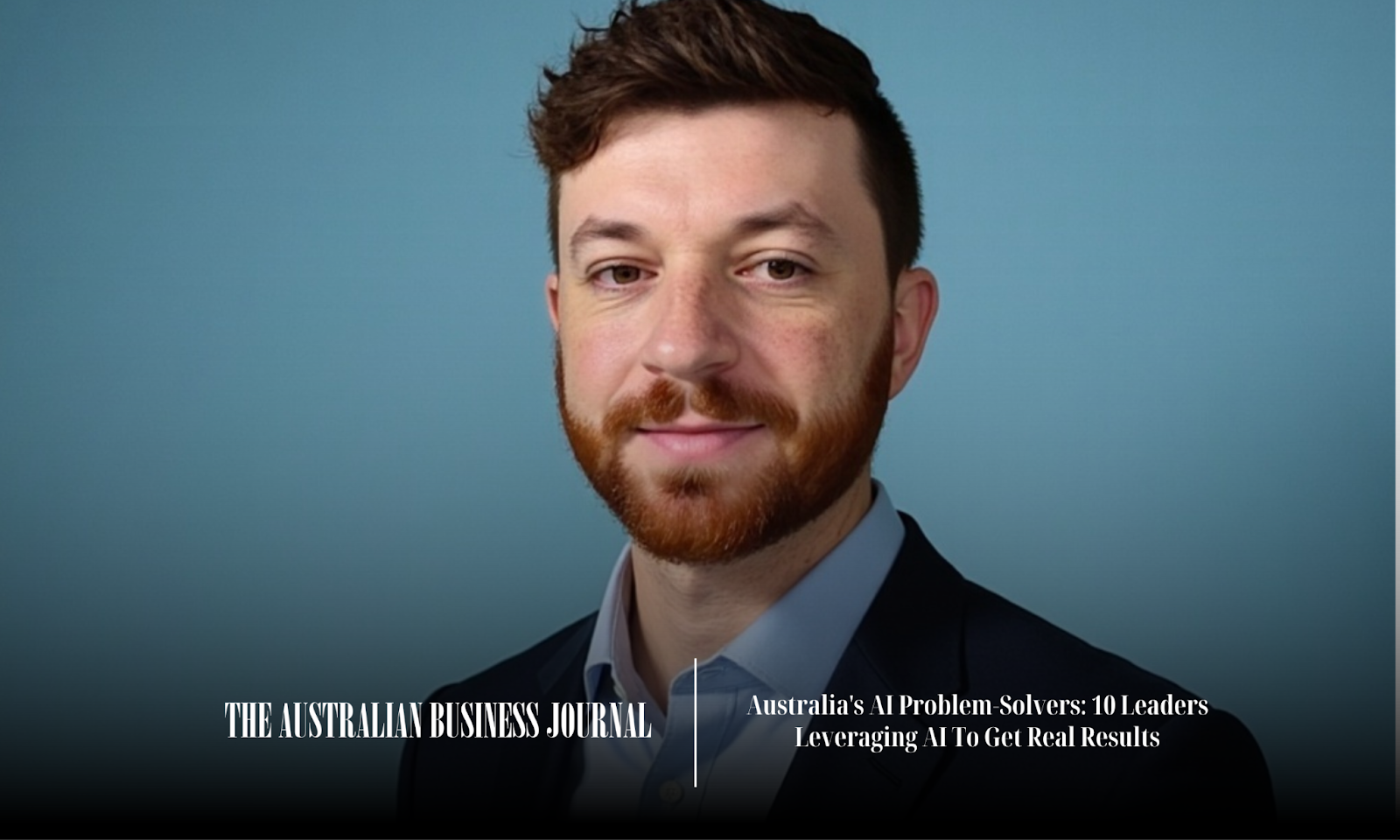
Most automation services either promise too much or deliver too little, but Paul Del Gigante built Inturing to do the opposite. From his base on the Central Coast of NSW, Paul helps small to mid-sized businesses rewire how they work by quietly removing the friction that eats their time, budget, and focus. His background spans technical know-how and sharp business sense, which shows in the way Inturing operates: no bloat and no nonsense, just smart systems doing what they’re supposed to do.
Inturing’s edge lies in its ability to deliver enterprise-grade AI and automation without the usual enterprise baggage. Instead of months-long rollouts and expensive integrations, Paul’s team designs and deploys intelligent workflows in days. Built on Microsoft’s Power Platform and enriched with cloud APIs and GPT-based assistants, their solutions are often invisible in the best way, doing things like qualifying leads, generating documents, syncing databases, or fielding customer queries without anyone noticing the machinery behind it. What’s left is a business that runs smoother, faster, and more intelligently, without having to hire a full-time developer or overhaul everything from scratch.
For sectors like education, recruitment, property, and professional services, which are industries with high admin loads and lean teams, this kind of operational clarity is gold. Inturing’s automation is designed to be picked up, understood, and actually used. In a market that too often mistakes complexity for sophistication, Paul’s work is a reminder that the best tech just makes things work.
Be sure to follow these incredible AI experts as they continue to shape the future of technology in 2025.
Disclaimer: The content in this article is for general informational purposes only and showcases professionals and organisations applying AI in meaningful, results-driven ways. This is a paid branded content feature, and some or all of the profiles included were developed in collaboration with the featured leaders or their representatives. While every effort has been made to ensure accuracy at the time of publication, readers are encouraged to verify details independently and consider professional advice before making any business or technology decisions based on this content.
This is branded content.


