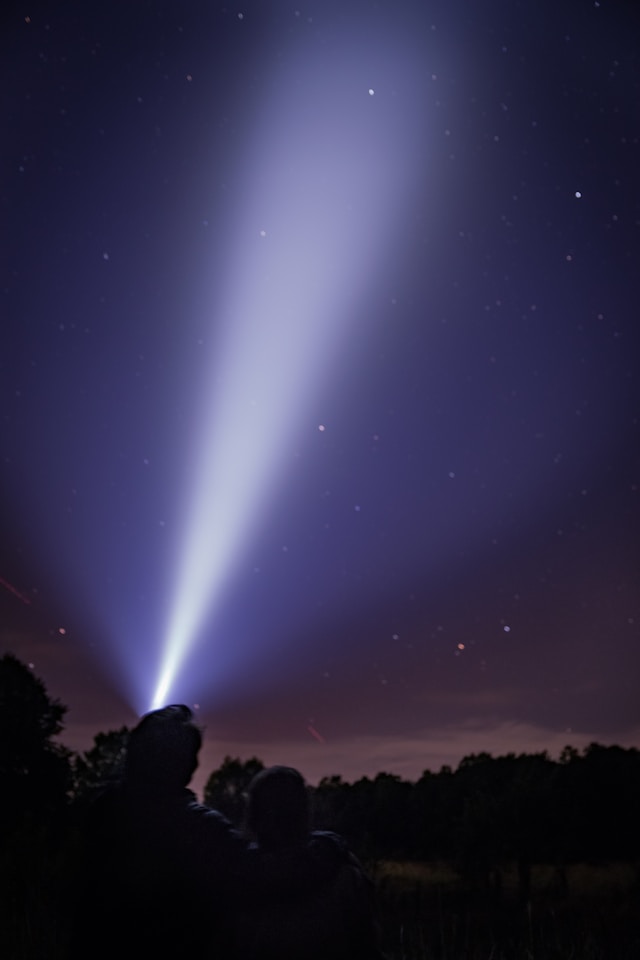
While it might be tempting to stay home and rug up, winter is the best time of year to go out and see the night sky.
This year has been particularly chilly in the southern half of Australia, but if you head outside on a cold, clear night, you’ll have an amazing view of our sparkling sky.
You may even see an emu too.
The darker the sky, the better.When you’re out there, one of the most obvious and largest features we see from a dark area in winter is the thick band of stars that stretches across the sky, which is our galaxy, the Milky Way.
And at this time of the year it is jam-packed with some of the most stunning constellations, star clusters, and clouds of gas. This makes it the prime viewing time for astronomers such as Stefania Barsanti.Dr Barsanti, from the Australian National University, uses the optical telescope at Siding Spring Observatory, a dark sky site near Coonabarabran.
“Some objects are only visible during a part of the year. So if you miss it, then you have to wait another year to do your science,” she says.
“During the winter, these beautiful clusters of galaxies are visible.
“They are the biggest objects in the Universe.”
Some features in our winter sky are only visible from the Southern Hemisphere, so Australia gets a front-row seat to the action.
But you don’t need to be a professional astronomer to explore the wonders of winter.
Here’s what to keep a look out for and how best to see it.
Constellations
At this time of the year, in the early evenings, the Southern Cross lies on its side, close to the southern horizon.
The five major stars are part of a larger constellation known as Crux.If you’re in a dark sky area, look carefully at the area near the brightest star in the crossbar of Crux (Mimosa) with binoculars or a small telescope. You’ll see a pretty cluster of red and blue stars known as the Jewel Box.
Moving higher in the sky are “the pointers” in the constellation of Centaurus, and Alpha Centauri, the third-brightest star in the night sky and our closest stellar neighbour.