In a glimpse of the dismal fate awaiting Earth, scientists for the first time have observed a star, bloated in its old age, swallowing a Jupiter-like planet, then expelling some material into space in an energetic belch.
Researchers said on Wednesday the star was in the early stages of what is called the red giant phase late in its life span as it depleted hydrogen fuel in its core and its dimensions began to expand.
As the star grew, its surface reached the orbit of the doomed planet, with mayhem ensuing.
The star, which started out similar to our sun in size and composition, is located in our Milky Way galaxy about 12,000 light-years from Earth in the direction of the constellation Aquila. A light year is the distance light travels in a year, 9.5 trillion kilometres.
The star is around 10 billion years old, twice as old as the sun.
Red giant stars can swell to a hundred times their original diameter, engulfing any planets in their way.
Scientists previously have observed such star expansion but not a planetary engulfment.
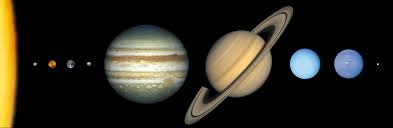
Mercury, Venus and then Earth, our solar system’s three innermost planets, will meet this destiny as the sun evolves through its red giant phase in about 5 billion years, according to Kishalay De, a postdoctoral fellow at the MIT Kavli Institute for Astrophysics and Space Research and lead author of the study published in the journal Nature.
The planet in this research was a type called a hot Jupiter — a gas giant resembling our solar system’s biggest world but with an orbit much tighter to its star.
This planet, perhaps a few times bigger than Jupiter, orbited its star in less than a day at a distance closer than Mercury, our innermost planet, orbits the sun.
As the star grew, its surface drew closer to the planet’s orbit.
Study co-author Morgan MacLeod said the planet started to skim through the star’s atmosphere like a satellite falling into Earth’s atmosphere.