The Health Services Union (HSU) has called for an NSW Royal Commission into the state government’s spending on healthcare due to a number of concerning factors.
Chronic over-servicing of procedures and treatments, misallocation of spending, and an ongoing staff exodus have raised alarm bells and the HSU is determined to get to the bottom of why these issues are occurring.
Despite the NSW government’s record $33b spent on healthcare in the 2022-23 budget, a report released by the Health Services Union (HSU) on Sunday said more transparency was needed regarding the direction of funds. The report suggests that money is not being spent in the most effective way, resulting in a decline in quality healthcare services.
The HSU believes that a Royal Commission is the only way to get to the heart of the matter and uncover the truth about why healthcare is not being serviced adequately. It is the union’s view that the government should be transparent about where the money is going and how it is being spent.
The Health Services Union has also claimed the state government is failing to invest in the healthcare system and has instead chosen to focus on other areas.
The call for a Royal Commission into healthcare spending comes at a time when the state of healthcare in NSW is in a dire state.
The number of people waiting for elective surgery is increasing, hospitals are struggling to meet the demand for services and many rural and remote areas are not receiving the same level of care as those in metropolitan areas.
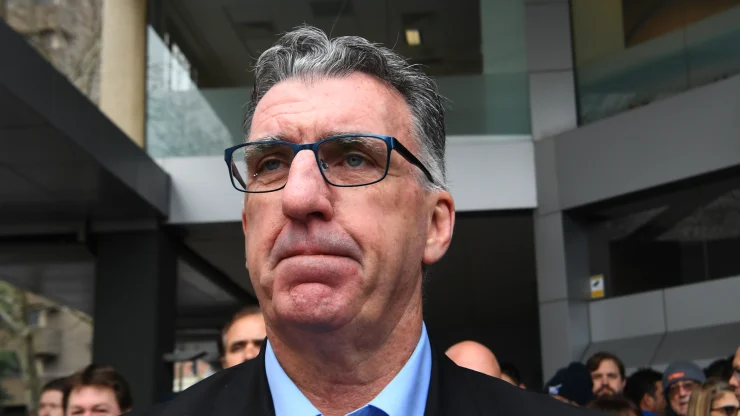
Gerard Hayes, the HSU NSW State Secretary, compared the out-of-balance system to a “$33 billion cash cow”. Despite the upcoming state election in less than 40 days, he stated the crisis was not politically motivated.
“Unless we uncover the origin of the money, no political party will be able to resolve this,” he said.
The report “Reform Critical – A Fragmented Health System at Breaking Point” revealed that, since 2011-12, patient complaints had skyrocketed by 40% due to the ongoing pandemic, and a staggering 144% overall.
Furthermore, 10% of NSW patients who had requested an ambulance between July and September 2022 had to wait more than two hours.
The report also proposed a 5 percent increase in spending on preventive health care, which it argued would decrease sickness and hospital visits.
It is estimated that NSW would need an additional 25,000 full-time equivalent medical, allied health, and support personnel by 2030; however, a survey of 4500 HSU members revealed that nearly half of them were either “unsure” or “definitely” thinking of leaving their job within the next five years.