The MacBook Air is the first of two new laptops with Apple’s first processor, its own M1 processor, which makes a huge explosion in performance and battery life.
The MacBook Air with M1 chip starts at £ 999 and is Apple’s standard entry-level laptop, sitting below the MacBook Pro and M1 starting at £ 1,299. Along with the new Mac mini, they are the first models in Apple’s complete transition from traditional Intel x86 processors to Apple’s chip-based chips similar to those used on iPhones and iPads.
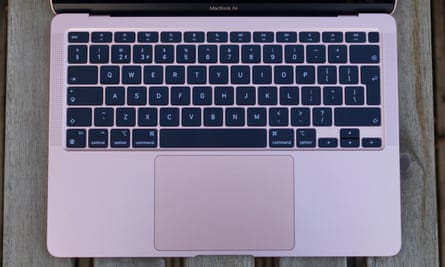
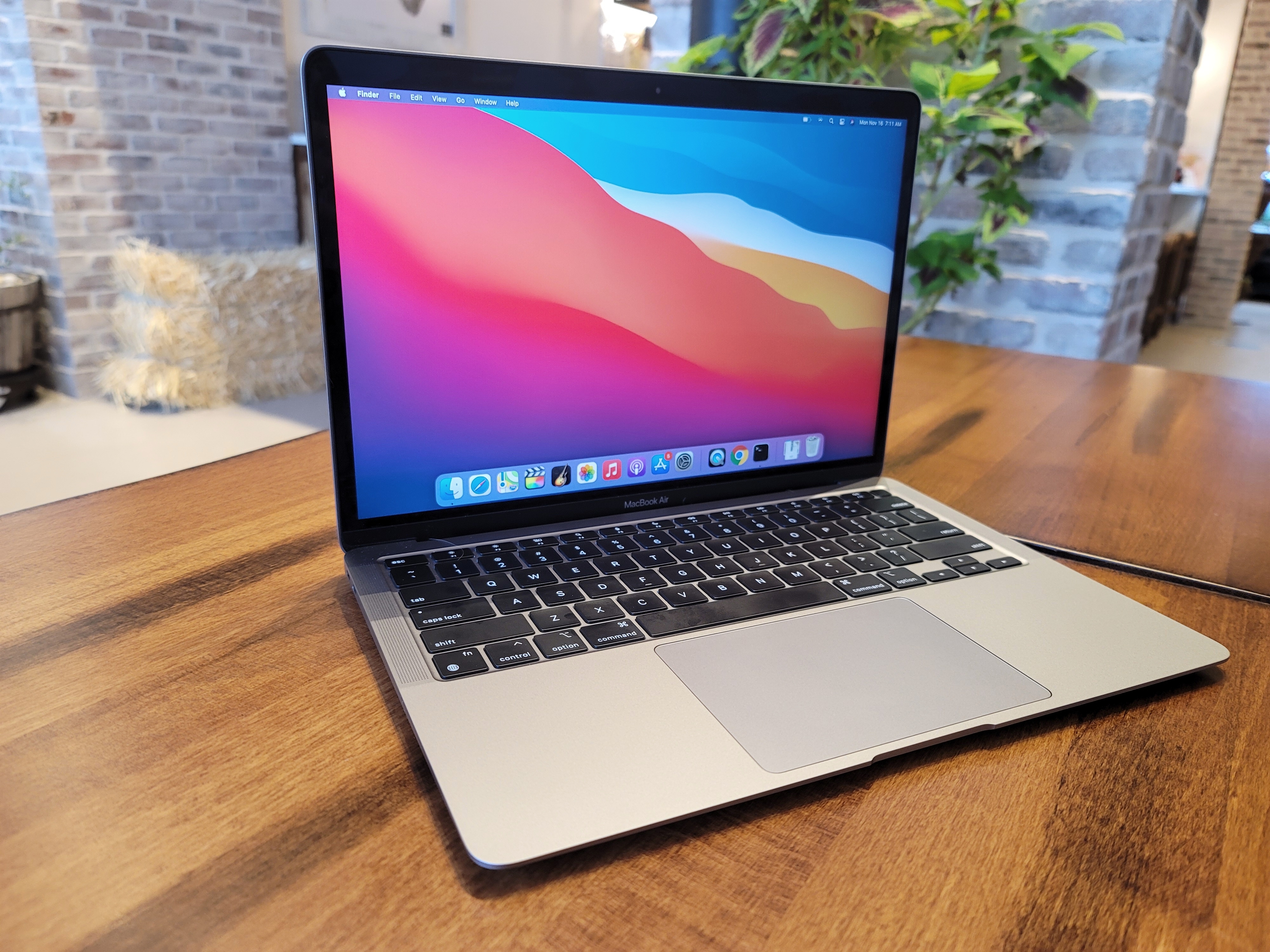
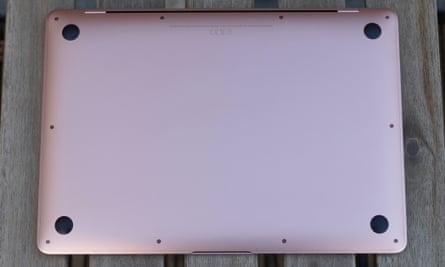
From the outside, there is almost nothing about the M1 MacBook Air that we have changed since April. They are similar in size and weight, the number of ports, microphones and speakers.
The 13.3in screen supports a wide range of DCI-P3 color space – a feature so far reserved for the most expensive MacBook Pro. The 720p camera is a bit better, too, but it’s poor compared to the ones on iPads, iPhones and other competing laptops, which is a real shame.
All in all, the design and functionality of the MacBook Air is almost ideal for a typical consumer computer, with its competitors hitting it with tiny bezels around the screen.
Specifications
- Screen: 13.3in LCD (2560×1600; 227 ppi) True Tone
- Processor: Apple M1 with seven or eight-core GPU
- RAM: 8 or 16GB
- Storage: 256GB, 512GB, 1TB or 2TB SSD
- Operating system: macOS 11 Big Sur
- Camera: 720p FaceTime HD camera
- Connectivity: wifi 6, Bluetooth 5, 2x USB 4 (USB-C)/Thunderbolt 3, headphones
- Dimensions: 212.4 x 304.1 x 16.1mm
- Weight: 1.29kg
Battery Life And Performance Boost
The Air Inside is almost exactly the same as before it, except for one very important part: the processor or, more precisely, the system-on-a-chip (SoC), which includes a processor, graphics and RAM all in one package.

The new M1 replaces the Intel Core i3, i5 or 7 of its predecessor. On the cheap MacBook Air (as tested) it has 8 processors (CPU) and seven graphics processors (GPU), with 8GB of RAM and 256GB of storage, but eight basic GPU options are available .
The M1 has four highly customizable CPU cables that handle demanding tasks such as data creation and image editing, while four efficient CPU cores perform lightweight tasks such as sending emails. All eight characters can work simultaneously to make them more efficient, but the chip is designed to use as much power as possible.
The M1 is also the first desktop pad to be made on the 5nm scale, whereas most are made on the 10 or 14nm scale. The smaller the scale, the more energy it can save.
Combined, it creates generation performance and connectivity for battery life. The M1 is faster than any other chip, as opposed to more powerful desktop chips, while it works much better.
Apple’s cheap and cheap laptop can now make things so far reserved for only larger, more efficient machines, and with longer battery life to start. If you want to schedule more 4K video streaming or other in-depth activities, Air will now do it.
Switch To M1 Chip
Switching to the M1 chip means that there are now three types of Mac programs to deal with. Apple apps (Arm) work traditionally on new computers, Intel apps can work with the help of Apple’s Rosetta 2 translation system, and “Universal” apps contain both Apple and -Intel, so they can work on any Mac, new or old. Developers are in the process of updating their applications to a new Universal format.
About half of the apps I use are Intel apps, and they all work seamlessly, including Typora, Microsoft To Do, Evernote, WhatsApp, Facebook Messages, Google Backup and Sync, and Spotify. Even the Garmin Express – a piece of software used to update watches and factory devices – works flawlessly.

Rosetta 2 works very well, I don’t think most consumers will need to pay attention to which app they are trying to use. The only thing you don’t use in Apple’s app is the short delay in launching Intel apps caused by Rosetta 2 working its magic.
But there will be certain software that will not work without updates, much of which may be business and development software. Google Drive File Stream file sync application for Workspace workspace is not supported on M1 Macs, for example.
MacOS 11 Big Sur
The new Air ships with Apple’s latest macOS Big Sur with new iPad-like design. It runs the same as it does on Intel Macs, except for the aforementioned Rosetta 2 system and the ability to install and run some iPhone and iPad apps.

The mobile apps can be installed through the Mac App Store, but only if their developer has either intentionally or unintentionally allowed them to be made available to M1 Macs.
Simply put, the apps aren’t great. The selection is slim, and those that are available are awkward to use at best or broken at worst, with a lot of apps that have seemingly been abandoned by their developers. Some apps are marked as being tested on Macs; others have not.
At some stage they may be worth using, but for now I wouldn’t bother; their Mac or browser-based equivalents are better.