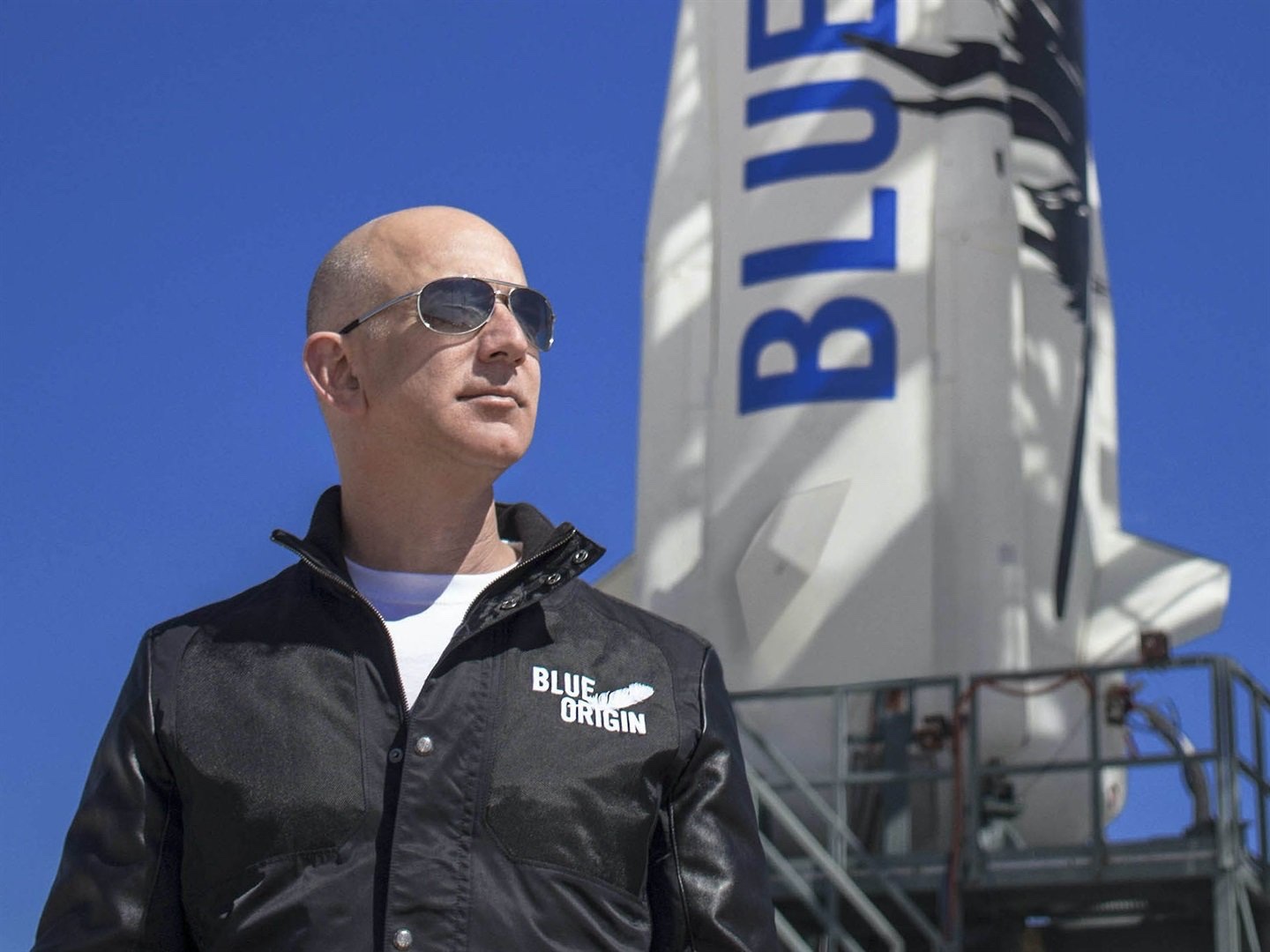
Jeff Bezos’ Blue Origin company is taking Nasa to court for its decision to award a $ 2.9bn (£ 2.1bn) space contract to Elon Musk’s SpaceX.
The former Amazon CEO said there were “significant issues” with the deal, calling it “unfair”.
Why The Lawsuit?
The lawsuit is based on the April decision of Nasa to offer the lunar lander contract to just one company instead of two as expected, due to a lack of funding.
Nasa is yet to comment on the development.
In a court hearing on Friday, Bezos’ firm Blue Origin said it continued to believe that Nasa needed two providers to build a landing system, which would transport astronauts down to the surface of the Moon by 2024.
Unlawful And Improper Evaluation
It also accused Nasa of “unlawful and improper evaluation” of its proposals during the tender process.
“We firmly believe that the issues identified in this procurement and its outcomes must be addressed to restore fairness, create competition and ensure a safe return to the Moon for America,” Blue Origin said.
Why Was Only SpaceX Awarded The Contract?
At the time of awarding the contract to Elon Musk’s SpaceX, NASA’s exploration chief, Kathy Lueders, acknowledged that the current space station financial budget restricts the selection of two companies.
This was after Congress gave Nasa only $ 850m of the $ 3.3bn it had requested for the project.
NASA also cited the confirmed orbital history of Elon Musk’s SpaceX company as a contributor to the award. Costs are considered to be a contributing factor for the award as well: The SpaceX bid was the least priced for a certain distance.
In July, Mr Bezos promised to pay up to $ 2bn of NASA’s costs for a review of the contract, but was turned down.
Artemis Programme
The Government Accountability Office (GAO), which also rejected the Blue Origin complaint and Dynetic defense contractor, said Nasa had not “acted improperly” by awarding one company only the lunar lander contract.
Nasa must file a response to legal action by 12 October. SpaceX is yet to comment on the case.
Under its Artemis plan, NASA hopes to reintroduce humans to the moon for the first time since 1972.
In April, Ms Lueders said: “This critical step puts humanity on a path to sustainable lunar exploration and keeps our eyes on missions farther into the solar system, including Mars.”