

A founder’s vision, relationships, and instincts can be some of a business’s greatest strengths. But as a company grows, those same strengths can become a source of pressure when every important decision, customer relationship, or operational challenge still depends on one person.
It’s a distinction strategic advisor and leadership coach Sue Turk believes more business owners should be thinking about: Is the business genuinely founder-led, or has it become founder-dependent?
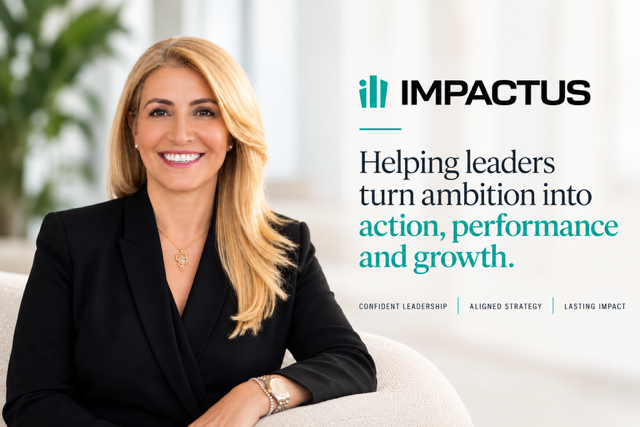
With more than 20 years of executive experience, Turk has seen how the leadership structures that help smaller businesses succeed can eventually restrict their growth. Today, through her advisory practice Impactus, she helps founders, CEOs and leadership teams navigate growth, transformation and major business decisions.
When Founder-Led Becomes Founder-Dependent
Founders often build successful businesses through quick decisions, strong customer relationships and close involvement in operations. In the early stages, that involvement can be essential. The difficulty comes when the organisation grows, but its decision-making doesn’t evolve.
Important decisions keep landing on the founder’s desk. Executives have responsibilities but limited authority to act. Critical knowledge stays in one person’s head, and key customer relationships depend on their personal involvement.
Turk believes founders don’t necessarily need to step away. Their judgement, energy and vision may remain central to the company’s success. The challenge is building a leadership team with the authority to make decisions, challenge constructively and take genuine accountability for outcomes.
Appointing experienced executives doesn’t automatically solve the problem. A company can have a capable leadership team and still rely on its founder to resolve disagreements, approve decisions and keep initiatives moving. Genuine accountability takes more than assigned responsibilities; leaders need the authority and confidence to own outcomes.
Experience on Both Sides of the Table
Turk’s perspective comes from having managed these challenges herself. Her career includes CEO, managing director and chief operating officer roles across start-ups, scaling businesses and multinationals in technology, professional services, sustainability and human capital. She has led commercial growth, transformation, restructures and significant change, working closely with boards and investors.
She was appointed the first CEO of a founder-led professional services business, with a mandate to lead its next stage of growth. She led a major commercial and organisational transformation, developing and embedding a growth strategy across its practices, introducing greater commercial discipline through new sales processes and technology, and pursuing opportunities for geographic expansion, strategic partnerships and new service offerings. She also strengthened the business’s leadership, people and culture foundations, helping position it for growth ahead of its subsequent acquisition.
These experiences shaped her understanding of the pressures executives face when delivering commercial results while changing how a business operates.
Why Strategic Alignment Matters
Another challenge Turk often sees is a disconnect between what a business wants to achieve and how its leadership team operates. An organisation may have a clear growth strategy while its executives disagree on priorities. Leaders may understand their own responsibilities without recognising how their decisions affect other departments. Or workplace culture and everyday behaviours may no longer support the company’s ambitions.
Strategy doesn’t always fail because the plan is wrong, she has found. Often, strategy, leadership and culture have gradually drifted apart. Closing that gap requires leaders to agree on priorities, make decisions collectively, challenge assumptions and take responsibility for results.
Building Leadership Teams That Can Scale
Turk now draws on that experience across strategic advisory, governance and coaching work, with businesses and leaders at different stages of growth.
Through Impactus, she works alongside founders, CEOs and leadership teams on strategic direction, commercial growth, organisational effectiveness and key business decisions, from emerging ventures to established organisations navigating transformation or leadership change. Her governance and advisory board roles bring independent perspective, commercial judgement and constructive challenge.
Her coaching supports emerging leaders stepping into greater responsibility, senior executives facing complex challenges, and founders developing the teams around them. She also delivers leadership team coaching through the Evolution Partners ecosystem, helping founders and executive teams strengthen alignment, accountability and execution discipline as they scale.
For Turk, these roles share a common thread: helping businesses make better decisions and building the leadership capability to deliver on them.
A founder can remain deeply influential without being personally responsible for everything that makes the business work. The question is whether the organisation has developed the leadership capability, shared accountability and strategic alignment to make that possible.
To learn more about Sue Turk’s work and perspectives on leadership, visit impactus.com.au or connect with her on LinkedIn.

