

For a body part that carries us through virtually every day, feet have a remarkable ability to be ignored until something goes wrong.
The range of problems that arrive at a podiatry clinic is considerably broader than many people realise. That breadth has shaped the development of Advance Foot Clinic Podiatry, the Queensland practice founded by podiatrist Angela Holland.
Across five clinics in Mount Isa, Arana Hills, Bellbowrie, Chermside and The Gap, the practice works with patients ranging from newly walking children to older adults, treating conditions involving biomechanics, sports injuries, diabetes, arthritis, skin and nail concerns and general foot health.
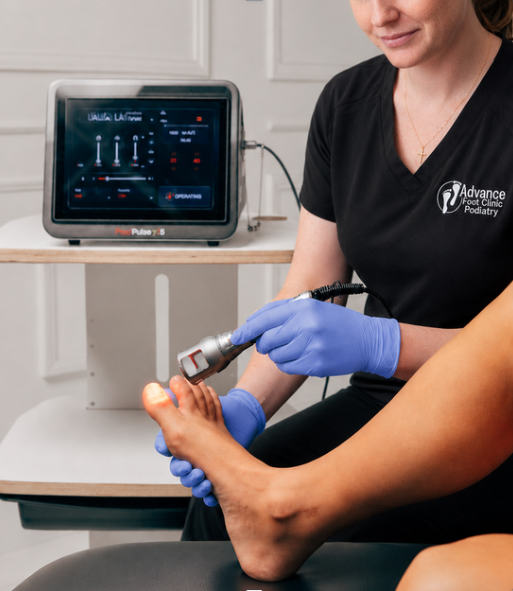
More recently, Advance Foot Clinic has added another technology to that mix: Bost FlexiPulse laser therapy.
Its introduction reflects a wider philosophy that has followed the practice as it has grown. New technology can expand the options available to patients, but it still needs to sit within careful assessment of the individual problem being treated.
Building a Practice Around a Changing Profession
Podiatry has evolved well beyond the relatively narrow perception of foot care that still surrounds the profession.
Modern clinics may deal with musculoskeletal injuries, gait and movement, chronic disease management, paediatric development, orthotic therapy and minor surgical procedures alongside more familiar nail and skin conditions. Advance Foot Clinic’s trajectory reflects that expansion.
Under Holland, who remains Principal Podiatrist and Director, the practice has developed across metropolitan Brisbane and Mount Isa while progressively incorporating technologies such as 3D scanning for orthotics, Swift therapy for warts and laser treatment.
The emphasis on new tools is accompanied by ongoing professional development within the team. Holland’s approach has been to treat clinicians as individuals, supporting continued learning while maintaining a focus on the patient experience and clinical outcomes.
That becomes particularly important when emerging treatments attract attention precisely because they offer something different from traditional options.
A Different Approach to a Persistent Problem
Fungal nails are a good example.
The condition can cause nails to become yellow, thickened, brittle or distorted and can be notoriously persistent. Treatment options have traditionally included topical preparations and oral antifungal medications, depending on the individual case.
The Bost FlexiPulse gives Advance Foot Clinic another option. For fungal nail treatment, controlled laser energy passes through the nail plate to reach the affected area underneath. The resulting therapeutic heat is intended to target the fungal environment while avoiding damage to the surrounding healthy tissue.
Treatment is non-invasive and does not require injections or surgical intervention. Because it works locally rather than through medication circulating throughout the body, it may also provide an alternative for some patients for whom oral antifungal medication is unsuitable. But the process doesn’t begin with the laser.
Before treatment, a podiatrist assesses the nail and considers factors that may be contributing to the problem, including footwear, trauma, circulation, diabetes, environmental exposure and broader health conditions. Thickened or damaged nails may need to be reduced before treatment, and progress is monitored over subsequent appointments.
That assessment matters because a damaged-looking nail does not automatically tell the clinician why it looks that way.
The Limits of the Quick Fix
One of the more important realities of fungal nail treatment is also one of the least exciting: nails grow slowly.
Even where treatment successfully addresses the underlying infection, the damaged portion of the nail does not disappear overnight. A healthier nail has to grow through, which can take months.
Advance Foot Clinic typically recommends multiple laser sessions, with the number and frequency depending on the patient’s circumstances and severity of the condition. Recurrence can also remain possible, particularly if the environmental or behavioural factors that contributed to the original infection remain unchanged. It makes managing expectations an important part of treatment.
That is particularly relevant as healthcare technology becomes increasingly visible to consumers. A sophisticated device can provide clinicians with another therapeutic option, but it cannot remove the biological realities of healing or replace the need to identify why a problem developed.
More Than One Use for Light
The science underpinning the FlexiPulse also extends beyond fungal nail treatment.
Photobiomodulation uses particular wavelengths of light to interact with tissue at a cellular level. Within musculoskeletal care, laser therapy is used with the aim of supporting processes associated with circulation, tissue repair, inflammation and pain management.
For a podiatry practice, those applications are significant because many conditions involve more than the surface of the foot. Muscles, tendons, joints, nerves and other tissues all contribute to movement and pain.
The technology therefore sits within a much broader clinical toolkit rather than functioning as a single-purpose treatment.
For Advance Foot Clinic, that toolkit already includes gait analysis, orthotics, footwear advice, diabetic foot care and treatment of sports injuries, developmental concerns, arthritis, corns, warts and nail conditions.
Where Technology Fits Into Podiatry
Healthcare has no shortage of new devices promising to change the way conditions are treated. The more useful question for practitioners is often where those technologies genuinely fit into existing care.
Advance Foot Clinic’s adoption of the Bost FlexiPulse is one example of how that process is playing out within podiatry.
To learn more about their new laser treatment and other services, visit afootc.com.au.

