


This article is a branded editorial feature showcasing innovative Australian SaaS companies shaping the software landscape.
Australia’s technology sector has undergone a remarkable transformation over the past decade, with Software-as-a-Service (SaaS) emerging as one of its most dynamic and fast-growing industries. Once considered a niche offering, SaaS has become the backbone of modern business operations, powering everything from customer engagement and financial management to workplace collaboration and data security.
In Australia, a new generation of SaaS companies is meeting global demand and also setting benchmarks for innovation, scalability, and user experience.
Here are the top 10 SaaS companies in Australia and how they are redefining how businesses operate, delivering solutions that streamline complexity, and proving that Australian innovation can compete on the world stage.
Lexin Solutions

Most SaaS companies discuss “value,” but Lexin Solutions builds it directly into the supply chain. Founded in 2022 by a team of seasoned MRO Supply Chain professionals and led by CEO Sladen Moses, Lexin Solutions is solving the operational pain points that eat into margins and decision-making across complex, asset-intensive sectors. From its base in Brisbane, Lexin Solutions serves global clients who don’t have the luxury of inefficiency and expect software to pay for itself fast.
Lexin Solutions is built on MiLi, a supply chain intelligence platform purpose-built to help teams get control over their indirect materials management. This includes everything from inventory visibility and optimised stocking strategies, to data and material criticality management, all tailored to real-world workflows and tightly integrated with existing ERP systems. MiLi isn’t layered on top of operations; it’s designed to live within them. Every feature reflects a 25-year backlog of hard-earned insight from professionals who’ve worked the same roles as their customers.
Lexin Solutions stands out in the crowded SaaS market due to its unapologetically grounded approach. The company guarantees ROI within 12 months or offers the second year of subscription for free, runs a customer advisory board that directly shapes its product roadmap, and delivers not just software, but also uplifts the capability of their client’s supply chain teams, so they complete every engagement smarter, more confident, and measurably better at what they do. Lexin Solutions shows that tools, built by people who’ve lived the problem, can unlock real transformation.
WorkfxAI

Vincent Po Li has spent his career at the intersection of AI innovation and large-scale commerce, holding leadership roles at Microsoft and Alibaba before founding WorkfxAI. At Microsoft, he worked on Bing’s AI evolution, sharpening his expertise in search and natural language systems. At Alibaba, he designed and optimised e-commerce recommendation engines used by millions worldwide. These experiences cemented his view that AI works best when it’s domain-specific, embedded into day-to-day workflows, and accessible to non-technical teams.
WorkfxAI brings its philosophy to retail, both online and offline, by providing businesses with a ready-made AI workforce. The platform leverages each organisation’s unique data, workflows, and knowledge to create production-ready AI agents in minutes, without coding. These agents aren’t generic chatbots; they’re specialised, role-specific tools such as a Retail GEO AI Agent for maximising generative AI visibility and citations, a Product Selection Agent that integrates TikTok, Amazon, and in-store data to spot trends, a Customer Service Agent that delivers brand-consistent responses, and a TikTok Influencer Recommender Agent that helps retailers identify the highest-ROI influencers for their product marketing.
What makes WorkfxAI stand out is its unification of retail’s often siloed online and offline operations into one AI-driven ecosystem. Retailers can centralise knowledge, speed decision-making, and deliver consistent customer experiences across channels—while cutting costs and improving operational resilience. With clients in Australia, New Zealand, and the U.S., the company is now building one of the first Retail AI Agents Marketplace, where retailers and industry specialists can share and monetise solutions. In doing so, WorkfxAI is shifting AI in retail from a tech experiment to a practical, revenue-driving asset.
Moroku

In a market where the Big Four banks dominate lending, payments, infrastructure and scale, Moroku, led by CEO Colin Weir, is taking a different route, supporting the challengers. The Sydney-based SaaS company has carved out a critical niche: equipping credit unions, mutuals, community and challenger banks with the tools to not only survive but win in a loyalty-driven, mobile-first financial ecosystem. It’s not just another core banking platform. It’s a full-stack rethink of what it means to bank, and be banked, in the 21st century.
Moroku’s approach starts with behaviour rather than infrastructure. Their modular platform, which features products like Moroku Money, Moroku Lending, and Odyssey, is built around the principles of behavioural science and game design. Rather than treat banking as a static series of transactions, Moroku turns it into a journey where users build financial capability through challenges, feedback loops, and rewards. Whilst many are focussed on Artificial Intelligence, Moroku is prioritising Emotional Intelligence, whilst that may be delivered by harnessing AI. For institutions, this means deeper relationships, higher engagement, and a clear path to customer loyalty without needing to compete on price alone.
What makes Moroku stand out in the SaaS banking space is its composability and clear sense of purpose. While legacy providers still cling to monolithic systems, Moroku offers a modular, cloud-native, mobile-first, stack that integrates quickly with key partners like Mambu, Biza, and Featurespace. This gives smaller banks the power to launch, iterate, and scale without the drag of outdated tech or vendor lock-in.
Auric Essentials
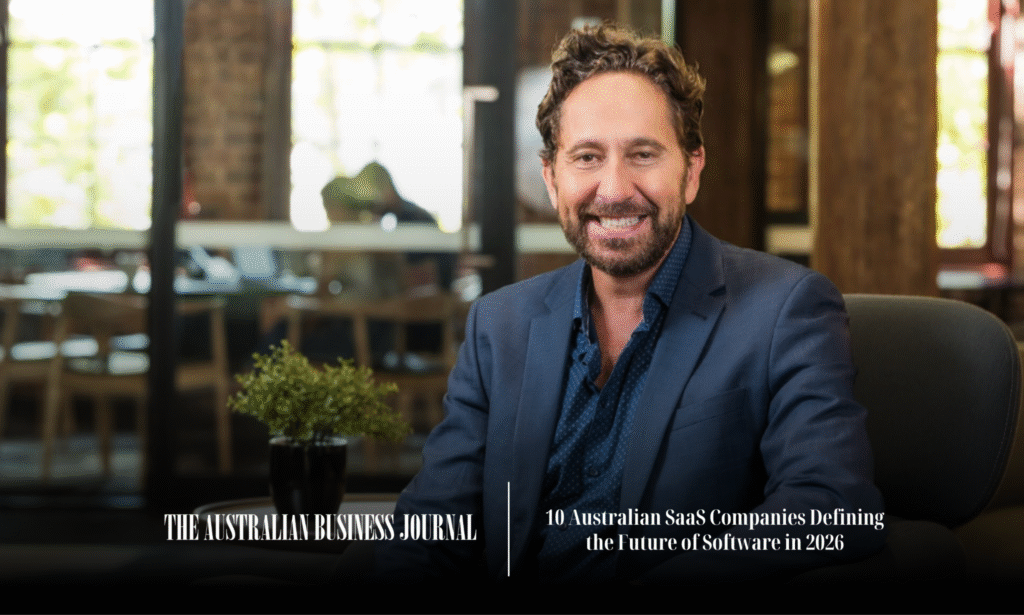
Auric Essentials isn’t your typical SaaS company, and that’s exactly what makes it essential for the future of wellness tech.
Co-founded by CEO Adam Good, a serial entrepreneur known for his work in creative tech and digital transformation, Auric addresses a sensory blind spot most software ignores: the absence of scent in intelligent, emotionally aware environments. While others chase screen-based engagement, Auric is building an emotional interface that blends AI, biosensing, and scent to shift how people feel in real time.
At the heart of the platform is the Auric AromaSphere, a patent-pending device that pairs therapeutic essential oils with biometric inputs to deliver adaptive rituals for calm, energy, focus, or sleep. But the hardware is only one layer. What makes Auric a standout SaaS business is its recurring ecosystem: oil refills, wellness data, mood tracking, and personalized routines delivered through a seamless mobile app. This is Mood-as-a-Service™, an entirely new category blending IoT hardware, therapeutic oils, and real-time emotional analytics into one adaptive wellness platform.
Where most wellness tech stops at wearables or mindfulness content, Auric pushes further, into the air itself. With TGA-approved oils, smart cap technology, and strategic backing from global accelerator Sputnik ATX and Australia’s Antler, the company is scaling fast. But it’s the vision that sets it apart. It’s redefining SaaS as something that doesn’t just automate tasks or track metrics, but actively enhances how we feel in our own spaces.
Braiv
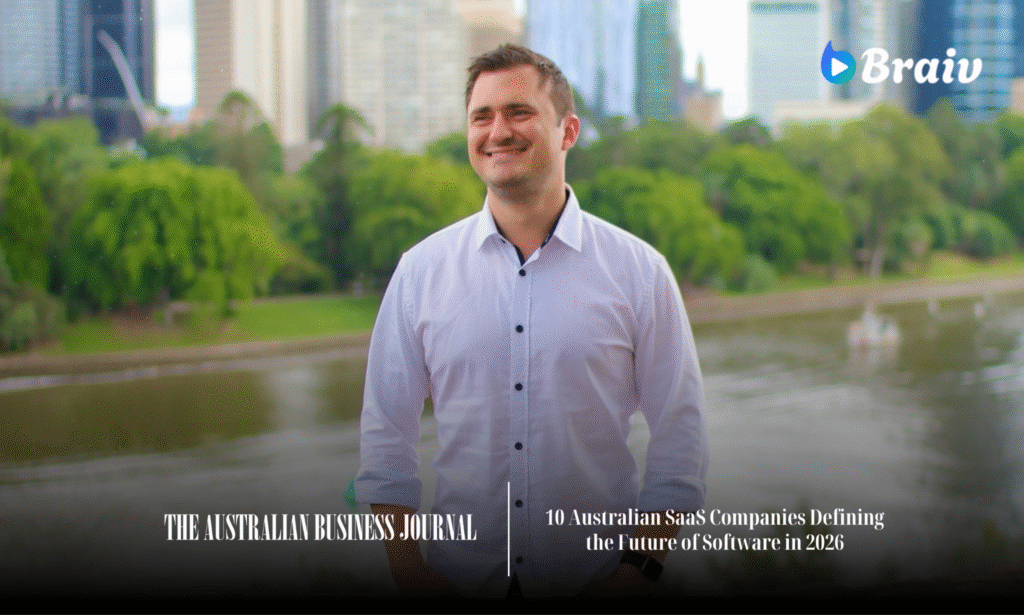
Braiv was born from a question most creators don’t know they should be asking: Who’s not watching my content because of language? For Ben Radcliffe, founder and CEO, the answer is staggering: 60% of watch time on English-language YouTube channels comes from viewers who don’t speak English as their preferred language. That’s why top creators choose to create & manage localized versions of their channels, but due to the cost & complexities associated, this strategy has remained a privilege reserved for the MrBeasts of the world.
Braiv exists to flip that equation.
Braiv is the first SaaS platform built from the ground up to support creators of any size, to leverage these proven growth strategies. It democratises access to all tools a creator needs to go multilingual: AI-powered subtitles, voice dubbing, translated metadata & thumbnails, and even auto-publishing to localized channels from a single platform. It’s not just about making content accessible; it’s about turning language into a growth engine. What used to take five tools and a small team can now be done in a single click.
That simplicity hides some serious thought. Braiv’s team is globally distributed and wildly multilingual because they’re building the product they wish existed. Unlike managed services that cater to creators already at the top, Braiv is for those still climbing. Whether you’re an indie educator, a niche YouTuber, or an up-and-coming podcaster, Braiv helps you speak to the world without losing your voice. In this next era of content, being global isn’t optional; it’s the default.
Routiq
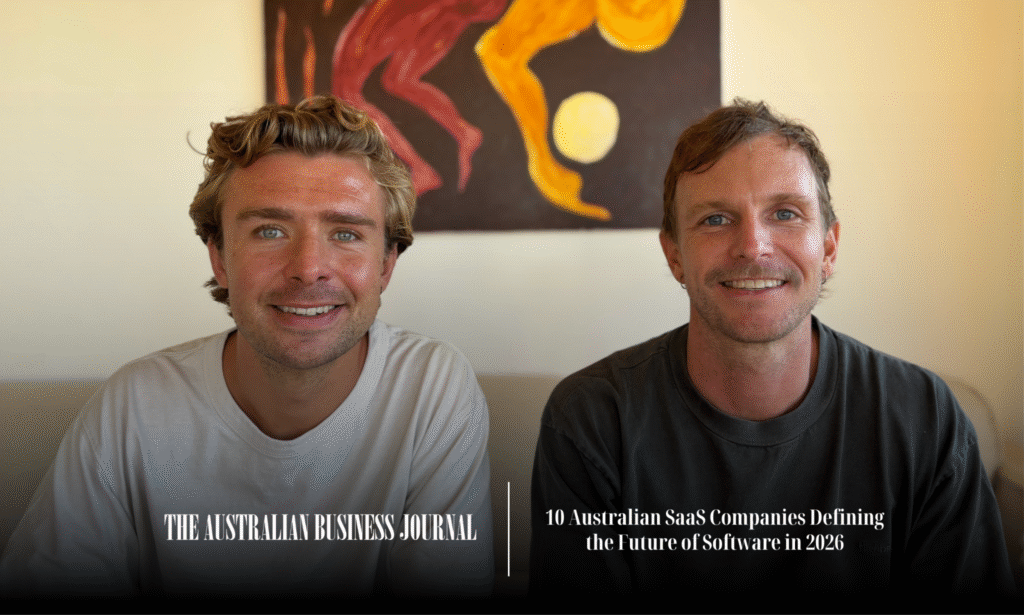
Routiq, co-founded by Daniel Welsh and Alex Greenwood, has carved out a distinctly different space in AI tools: making advanced AI work within the systems businesses already have. Rather than asking companies to rip and replace, Routiq’s “Intelligence Layer” overlays existing infrastructure with adaptive AI capabilities, enabling automation, insight, and innovation without operational upheaval.
At its core, Routiq tackles the often-overlooked barrier to AI adoption: integration friction. The platform’s workflow orchestration engine transforms fragmented, manual processes into streamlined, AI-powered systems. This can mean anything from eliminating administrative bottlenecks to deploying real-time business intelligence, all while keeping the client’s current tech stack intact. The modular architecture is designed to evolve, meaning that as new AI models like ChatGPT, Claude, or others enter the market, businesses can adopt them instantly without another costly transformation project.
The approach is both strategic and technical. Routiq isn’t chasing every new AI capability; it’s building a stable, future-proof framework that keeps businesses connected to the best tools available at any moment. For Australian SMEs, this means accessing enterprise-grade AI intelligence without the million-dollar price tag. For larger organisations, it means staying competitive in a landscape where today’s breakthrough can become tomorrow’s legacy system. To the Routiq team, AI is an adaptive layer that grows smarter over time, quietly compounding value while keeping businesses firmly in control of their operations.
Howwe®
In most companies, strategy dies in a slide deck. Howwe, Software-as-a-Service (SaaS) with an embedded execution methodology, born in Sweden and now operating globally, was built to solve this exact problem: turning strategic intent into measurable results.
At its core, Howwe is strategy execution and goal achievement software designed for large and mid-sized organizations. Its strength lies in breaking down high-level goals into tangible milestones and embedding them into everyday ways of working. Instead of lengthy status meetings or static reports, teams use short “Acceleration Meetings” paired with real-time dashboards to keep progress visible and blockages resolved. Built-in AI and smart, proactive ‘nudges’ help ensure that the most important priorities stay top of mind, without the drag of micromanagement.
The software’s design reflects decades of leadership and organizational research. Transparency, accountability, and data-driven decision-making are central to its model. Clients typically see improvements in critical metrics within months, evidence of the ability to shift leaders’ behaviours from reactive to proactive. By simplifying the mechanics of strategy execution, aligning goals, tracking progress, and accelerating decision-making, Howwe addresses a universal challenge that spans industries.
What distinguishes Howwe is not just its technology, but its methodology. It isn’t about adding another tool to an already crowded stack; it’s about reshaping how organizations sustain focus and individuals become better leaders. Howwe ‘s value lies in its simplicity, with the focus on keeping strategy alive, actionable, and owned at every level of the business.
Innoculator
Few challenges in cybersecurity are as persistent or as quietly costly as unpatched applications. Vulnerabilities left open for weeks or months remain one of the most common entry points for attackers. Innoculator, a Melbourne-based startup, is tackling this problem head-on with a next-generation platform that uses AI-powered virtual patching to close the gap between discovery and remediation.
The idea is simple but transformative. Instead of waiting for traditional patch cycles or engineering fixes, Innoculator’s system generates network-based virtual patches within minutes of identifying a vulnerability. For organisations still running legacy software, this approach offers protection where traditional patching is no longer feasible. It’s not a replacement for permanent fixes, but a way to shield workloads from exploitation while teams manage longer-term upgrades.
What distinguishes Innoculator is its combination of AI automation and network-layer enforcement. By working across environments rather than inside individual applications, the platform protects a wide variety of workloads quickly and consistently. It shifts the model from “patch when you can” to “protect immediately,” a meaningful difference for enterprises carrying complex or ageing tech stacks.
Founded by a team with over 15 years in cybersecurity, including experience building APJ teams for US-based startups, Innoculator is carving a distinct space in a crowded market. At its core, it is addressing one of the industry’s least glamorous but most urgent problems: the reality that software outlives support cycles, attackers move fast, and businesses need practical tools to bridge the gap.
LocalStalls
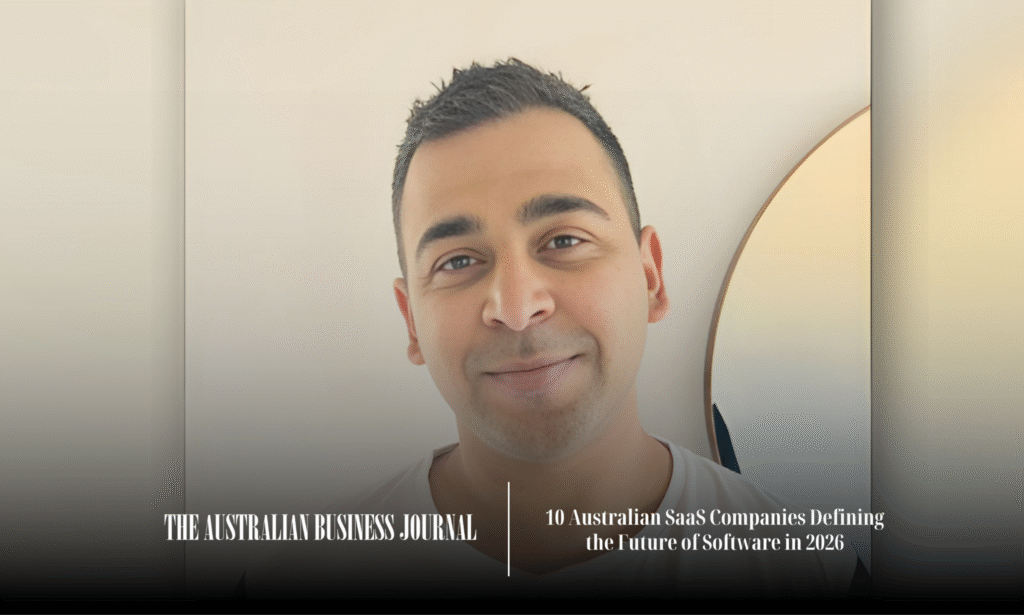
Markets and festivals are more than transactions; they are social infrastructure, giving small businesses, growers, and artisans a place to connect with communities. But behind the colour and bustle is a logistical challenge. Coordinating applications, managing payments, tracking capacity, assigning stalls, and keeping everyone informed is time-intensive, often cobbled together with spreadsheets and generic event tools. LocalStalls, an Australian SaaS platform led by CEO Aaron Busary, was built to solve this exact problem.
Unlike broad event management software, LocalStalls is purpose-built for markets and festivals. Its platform gives organisers an end-to-end system covering everything from stallholder applications and invoicing to drag-and-drop site mapping, ticketing, and live event operations. Stallholders benefit as well, with a vendor-facing app and market directory that make finding and managing bookings straightforward. The result is a platform that serves both sides of the exchange—reducing administrative friction while amplifying visibility for local makers.
What distinguishes LocalStalls is its grounding in the realities of market life. Features are developed directly from organiser feedback rather than adapted from conference software or ticketing systems. That specificity matters. Markets operate on thin margins and heavy volunteer input; a system that replaces five or six disconnected tools with one streamlined platform can determine whether an event thrives or stalls. With adoption spreading across Australia, New Zealand, and the UK, LocalStalls demonstrates how SaaS can succeed by embedding itself in a niche community, solving its most pressing problems, and enabling the cultural and economic ripple effects that markets bring to local economies.
OnQ Software
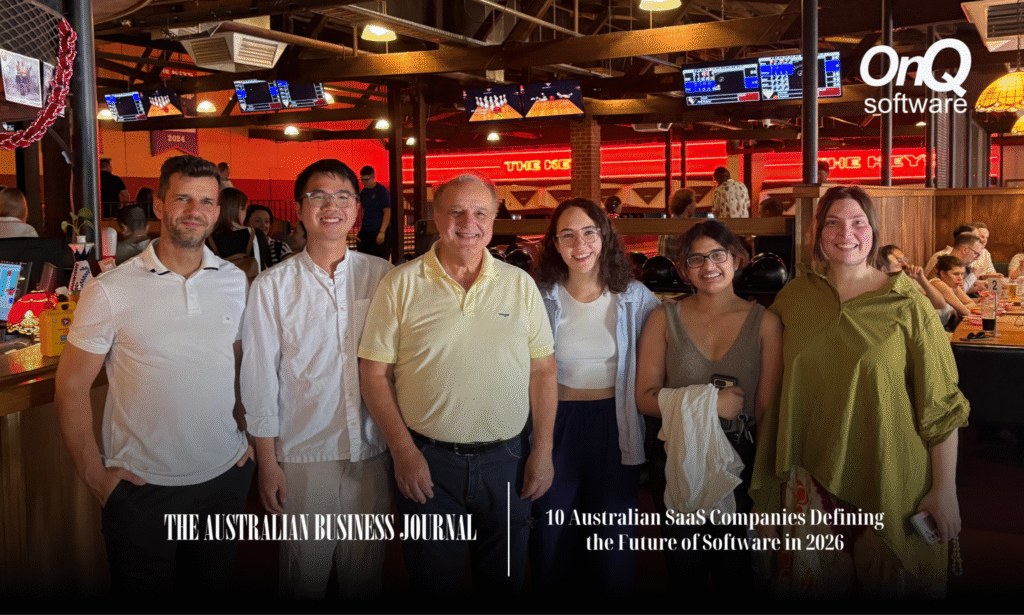
For most laboratories, the biggest obstacle to innovation is administration. From managing samples to tracking data across disconnected systems, inefficiency eats into the very time researchers should be spending on discovery. OnQ Software, an Australian-founded company now operating globally, addresses this gap.
Their flagship product, QLIMS, is a SaaS laboratory information management system designed to bring automation, integration, and reporting into a single, accessible platform. At its simplest, QLIMS reduces the reliance on manual, time-consuming processes, making it easier for scientists to manage workflows while ensuring data integrity and regulatory compliance. Its no-code configuration, API-driven integrations, and evolutionary architecture mean laboratories can adapt quickly as their needs change, without being locked into rigid systems.
OnQ Software’s origins trace back to founder Nick Gannoulis, who, as a research scientist at St Vincent’s Hospital, saw firsthand the inefficiencies of paper-based lab systems. That insight became the foundation for a platform now trusted by laboratories across industries from genomics to food science, from Melbourne to the Netherlands.
The OnQ Software team brings both scientific and technical expertise, positioning them to design tools that reflect real laboratory workflows. Their partnership with AWS as a qualified software partner underscores a commitment to security and scalability, while upcoming AI-powered features show a willingness to evolve with the industry. In a sector where outdated systems often slow progress, OnQ Software’s focus is clear: free scientists from administrative bottlenecks so they can focus on the science itself.
Be sure to check out and follow all these innovative SaaS companies as they shape the future of software.
Disclaimer: The information presented in this article is for general informational purposes only and highlights companies making an impact in the Australian SaaS industry. This is a paid branded content feature, and some or all of the profiles included were developed in collaboration with the featured companies or their representatives. While every effort has been made to ensure accuracy at the time of publication, readers are encouraged to verify any details independently and explore each company’s offerings based on their own business needs.
Branded content.


