

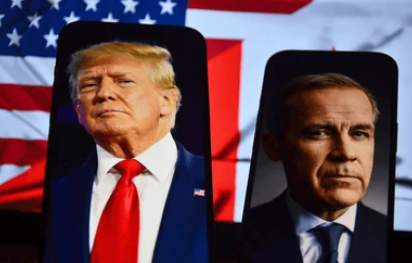
In a political twist that few saw coming, Mark Carney and the Liberal Party of Canada have pulled off a dramatic comeback, securing a minority government in the 2025 federal election. The win defied predictions of a Conservative sweep and put the former central banker in the Prime Minister’s seat—at a time when Canada’s relationship with the U.S. is more strained than ever.
The Unexpected Comeback
Just a few months ago, the Liberals looked finished. After Justin Trudeau stepped down in January 2025, polls had Pierre Poilievre’s Conservatives in a commanding lead. A majority government seemed inevitable.
Then everything changed.
Two big developments flipped the script: Mark Carney stepped in as Liberal leader, and tensions with the Trump administration hit boiling point.
Carney, the only person to ever lead two G7 central banks—the Bank of Canada and the Bank of England—instantly brought global credibility to the role. His economic know-how and steady-hand image resonated with voters facing tough times.
“We were dead and buried in December. Now we are going to form a government,” said former Liberal Justice Minister David Lametti. “We have turned this around thanks to Mark Carney.”
The Trump Factor & Mark Carney
Much of the election’s momentum shifted due to escalating friction between Canada and the United States.
President Donald Trump’s trade policies hit Canada hard. In April 2025, his administration slapped 25% tariffs on most Canadian goods, branding it “Liberation Day.” The move rattled the economy and fueled nationalist sentiment among Canadian voters.
Political scientist Eric Merkley summed it up clearly: > “Trump altered the course of this campaign. This election would have gone very differently without his attacks on Canada’s economy and sovereignty.”
The situation reached new heights when Trump urged Canadians to vote for him—sparking backlash. Conservative leader Pierre Poilievre responded: > “President Trump, stay out of our election. The only people who will decide the future of Canada are Canadians at the ballot box.”
A Defiant Victory Speech
Carney didn’t hold back in his victory speech. He directly called out the Trump administration and warned Canadians to stand united against outside interference.
“America wants our land, our resources, our water, our country. These are not idle threats. President Trump is trying to break us so that America can own us. That will never, ever happen,” he told supporters in Ottawa.
He made it clear: Canada’s close integration with the U.S. is over.
“We are over the shock of the American betrayal, but we should never forget the lessons. We have to look out for ourselves.”
Carney outlined a bold vision focused on housing, infrastructure, energy corridors, and skilled trade jobs. His new slogan—”we are going to build, baby, build”—captured the energy behind his economic agenda.
The Election Results
The Liberals won 169 seats—just short of the 172 needed for a majority, but still enough to form a minority government. The Conservatives took 144 seats and will form the official opposition.
In a shock result, Pierre Poilievre lost his seat in the Carleton riding to Liberal challenger Bruce Fanjoy.
Meanwhile, the New Democratic Party (NDP) suffered a collapse. With fewer than 12 seats, they lost official party status. Jagmeet Singh resigned shortly after the results came in.
The Bloc Québécois held steady in Quebec, with leader Yves-François Blanchet re-elected in his home riding of Beloeil-Chambly.
Economic Implications
With the Liberals set to lead a minority government, economists are already analyzing what Carney’s leadership means for the future.
The Liberal platform promises nearly $130 billion in new spending. The focus? Infrastructure, defence, housing, internal trade, economic growth, and resource development.
“Despite what seems like a scattershot of policies, the central theme is to pivot Canada towards domestic economic resilience,” said TD Chief Economist Beata Caranci.
CIBC’s Avery Shenfeld added that budget deficits will likely rise in the short term—something typical when a country faces economic shocks and stimulus spending ramps up.
International Reactions
Global leaders were quick to respond. French President Emmanuel Macron congratulated Carney, calling him a symbol of a “strong Canada.”
Other countries hit by Trump’s trade policies—including China, India, the UK, and Australia—are watching closely. Some may look to Canada as a strategic partner in pushing back against U.S. economic pressure.
The Road Ahead
Now, the hard work begins.
As Prime Minister, Carney will need to build coalitions in Parliament to pass key legislation—especially on trade and economic issues tied to the U.S.
He’s already drawn a line in the sand: > “When I sit down with President Trump, it will be to discuss the future of two sovereign nations. And we know—we have many, many other options than the United States to build prosperity for Canadians.”
His global experience and economic credentials will be tested. The challenge? Uniting a politically divided country while standing strong on the world stage.
Carney’s rise to power may have been unexpected, but it’s arrived at a turning point in Canada’s history. Now, he must deliver—on unity, on resilience, and on a future that puts Canada first.
For more of the latest top stories, click here.


