

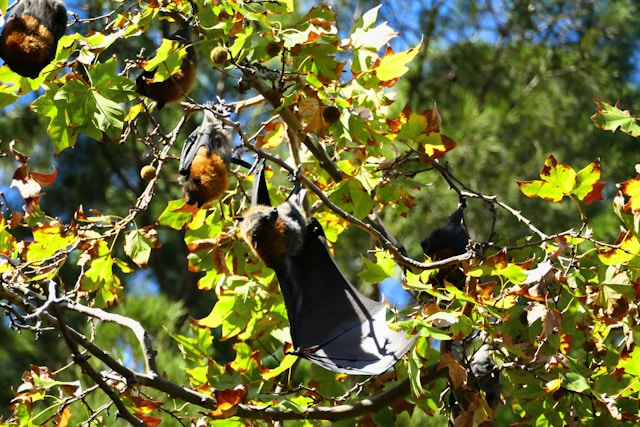
Cruising into Rockhampton on an evening flight, you may be lucky enough to catch a central Queensland sunset over the botanic gardens before touching down.
But those gardens, and some of the creatures that live there, may also be the reason you take longer to land.
The Rockhampton Botanic Gardens is home to up to 10,000 flying foxes during the breeding season, and the tiny creatures can be a hazard to aircraft.
Rockhampton Airport, which is owned by the local council, recorded 43 bat and bird strikes this past financial year.CQUniversity biology professor Simon Robson said it was common for bats and flying foxes to be active at sunset as they searched for something to eat.
“This time of the year they’ll move between camps looking for places where they can roost safely and find food,” Professor Robson said.
“So [they are] seasonally driven by the climate, the weather, and food availability.”Bird and bat strikes can be potentially catastrophic for aircraft because of the damage they can cause.
To avoid a mid-air collision with bats, air traffic control notifies pilots of the potential danger, and the plane then circles until the bat colony clears and it is safe to land.
The impact on flights can range from 10 minutes of circling to flight cancellations if an aircraft strikes a bat or bird.
Qantas Airlines and Virgin Australia both confirmed that their aircraft had been impacted in recent weeks.
A Qantas flight scheduled to fly out of Rockhampton last month had to be cancelled after it struck a bat on its arrival to the city.
The council said in a statement it did not record the number of aircraft specifically delayed by bats.
However, multiple passengers have taken to social media this year to report having flights disrupted by the nocturnal mammals.
Peace Aviation chief pilot Stephen Alley said he was able to manage his flight schedule from the airport to avoid flying at dusk, but commercial airlines do not have the same flexibility.
“For us, it usually just revolves around either making sure we’re going to be back on the ground before dark or that we’re going to be back in Rockhampton comfortably after the bats would have moved on,” he said.
“I think Rockhampton is a particularly bad spot as far as bats go. We’ve got a huge section of water at each end of the runway, so that sort of encourages bird life.”Mr Alley said although he avoided flying at sunset, the bats could pose a bigger risk to larger aircraft because of engine design.
“They have a propeller on the front or they’re operating jet engines,” he said.
“Either type of those engines could suck either a bird or a bat into the engine and that could be quite damaging.”
Mitigating the risk
The council said it had multiple strategies to reduce the risk and disperse the bats, however, it was limited as to what could be done during breeding season.
“When they fly in with baby bats attached to them, that means the state’s [Queensland] legislation doesn’t allow us to do any nudging or dispersal,” Councillor Grant Mathers said.
Councillor Mathers said once the breeding season was over, the council would begin its dispersal program.


