

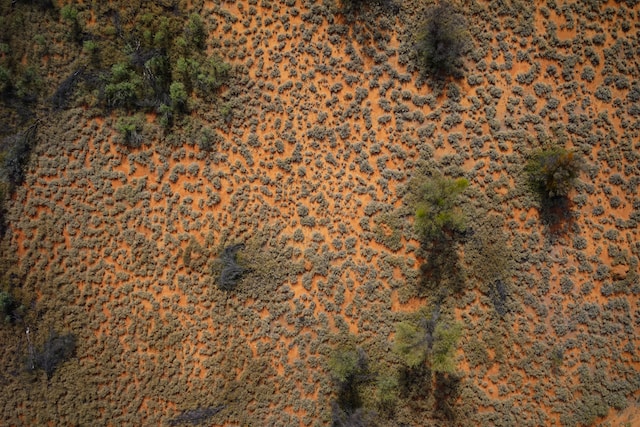
A key ingredient in the deadly Maui fires — unmanaged invasive grasses, like buffel grass — is also spreading throughout vast areas of Australia, prompting a warning about the increased risk to people, houses and biodiversity on this side of the globe.
Buffel grass was introduced to Australia inadvertently by Afghan cameleers in the 1870s, and was later used deliberately to improve degraded rangelands in agriculture and suppress dust.
But it has now spread well beyond its planted areas and is present in every mainland state and territory, according to researchers.
The highly flammable grass is able to grow vigorously, even in comparison to native plants, building thick and highly flammable fuel loads throughout the landscape.
South Australia state buffel grass coordinator Troy Bowman said without diligent, ongoing management, it posed a real threat to human life.
“There’s certainly a risk that at some point we may actually lose lives, due to buffel grass fires getting into the community and impacting on housing and associated safety,” he said.
He said this was especially true for remote communities in SA, and towns such as Port Augusta and Coober Pedy, where there had been a significant increase in buffel grass growth.
Homes have already been threatened this year in the Northern Territory, when a planned burn fuelled by the invasive grass escaped and came right to the doorstep of Alice Springs homes, after ripping through the Tjoritja/West MacDonnell National Park.
Hawaii fire fuel
In August, the spread of non-native grasses in Hawaii was put under the microscope, when the island of Maui ignited in one of the deadliest fires in US history.
The death toll stands at 97 people, with 31 still missing.
The devastating blaze was the result of a complex concoction of factors, fanned by extreme winds of over 100 kilometres per hour, and a hot, dry climate in a region in the grips of a flash drought, not well prepared for fire.
But experts have also pointed blame firmly at invasive grass species, which cover a quarter of Hawaii, according to scientists.
Charles Darwin University environmental scientist Christine Schlesinger said the situation in Australia was different in terms of where houses were situated and how they were constructed.
But she said the invasive grass was “absolutely a threat” to property and to people in Australia.
“Buffel grass just grows thicker, taller, and it’s much more continuous,” she said.
“And what we’re seeing is bigger fires, and hotter fires than what would have occurred in natural conditions.”
And it doesn’t just pose a risk to human lives and property.
Both Dr Schlesinger and Mr Bowman spoke of its increasing threat to biodiversity and its ability to “completely change the landscape”.


