

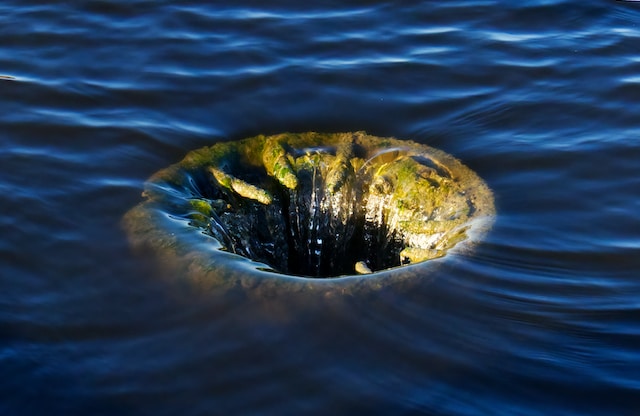
The proprietor of a south-east South Australian caravan park with a 7-metre-wide sinkhole says mapping should be undertaken to identify danger areas.
This follows the collapse of a sinkhole at the Railway Lands in Mount Gambier on Sunday morning.
Mount Gambier Central Caravan Park proprietor Joy Bowd said she believed the council should do more to make locals aware of vulnerabilities following the collapse.
“I think there could be quite a few more coming up in Mount Gambier,” Ms Bowd said.
“Everyone knows there are underground caves all around.
“They do have ways to test and I’m surprised that they didn’t do that on the property.”
City of Mount Gambier city infrastructure general manager Barbara Cernovskis said the council had done some mapping of the area and was “working with other agencies to get a clearer picture” of at-risk areas.
“We are taking steps to become more sophisticated in the consolidation of information and working collaboratively with other agencies to manage these incidents when they occur,” she said.
Ms Bowd has her own experience with sinkholes, when a car driving out of the caravan park had a wheel collapse into the ground in October 2014.
The cause was a sinkhole, which has now grown to several metres wide due to rainfall.
“It’s definitely going to get bigger if nothing’s done,” Ms Bowd said.
“[During the rain] more falls in. It’s grown about [60cm] wider [in recent heavy rain].”
Semi-permanent resident Gordon Paltridge said he worried for other park users’ safety.
“They have children coming in here; you don’t want anyone falling into a hole like that,” he said.
“It’s got to be stopped one way or another.”
‘An eyesore and a danger’
The caravan park sinkhole has been backfilled previously, before collapsing again.
“There were 5 tonnes of rocks in there before, and they’ve gone down the hole, and then the council cemented the top and that’s gone down the hole as well,” Mr Paltridge said.
“It’s a bit scary really because it’s just going to get deeper and deeper.”
Ms Cernovskis said the council had relocated infrastructure to avoid damage from the “naturally occurring” sinkhole.


