

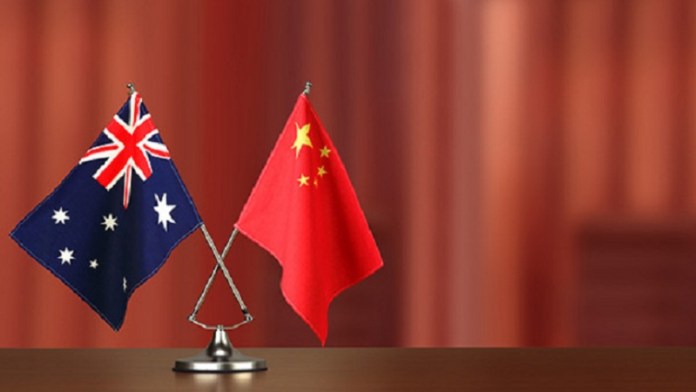
China has said it is “deeply concerned” about what it has described as the Australian government’s operation of offshore detention centres, and has called for the sites to be closed immediately.
Relations between the two countries deteriorated in 2018 when Australia became the first nation to publicly ban China’s Huawei from its 5G network and worsened when Australia last year demanded an investigation into the novel coronavirus origins.
China’s Statement
In a statement sent to the UN Human Rights Council in Geneva, China stated that detention centers “lack adequate medical conditions where large numbers of immigrants, refugees and asylum seekers are detained for extended periods of time or even permanently, and their rights are violated”.
It did not specify any location, describing them as “third countries”.
Asylum seekers who were caught at sea on their way to Australia were sent for “processing” to Papua New Guinea or to the South Pacific island of Nauru.
The Australian Department of Foreign Affairs and Trade did not immediately respond to a request for comment.
China’s Human Rights Record
China itself has long been accused of operating in detention centers, and UN experts and human rights groups estimate that it has detained more than a million people in its Xinjiang region, most of them Uighurs and other minority Muslims, in the main camps.
China has described camps as training centers designed to fight extremism.
“We urge Australia to immediately close down all offshore detention centres and take concrete steps to protect the rights of immigrants, refugees and asylum seekers, especially children,” China said in its statement, which it submitted on behalf of a group of unnamed countries.
It also called on Australia to carry out “comprehensive and fair investigations” into reported claims of “serious war crimes” allegedly committed by Australian troops overseas.
An Australian investigation published in November found that Australian special forces were accused of killing prisoners and 39 unarmed civilians in Afghanistan between 2005 and 2016, with criticism from China’s foreign ministry.


