

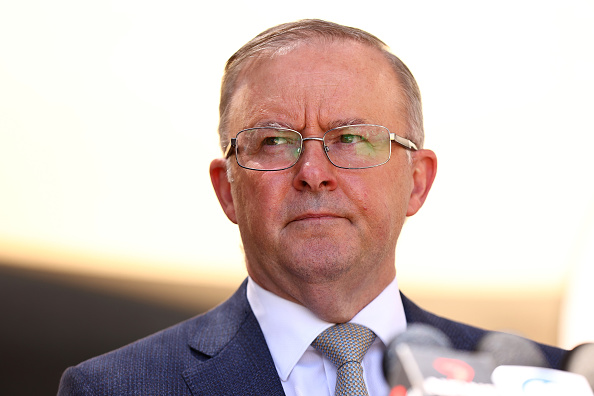
In a major strategic move, Australian Prime Minister Anthony Albanese and US President Donald Trump have signed a landmark US$8.5 billion (A$13.1 billion) agreement to strengthen supply chains for critical minerals and rare earths. The deal gives Australia a real chance to challenge China’s dominance in the global critical-minerals industry — a sector vital for clean energy, defence, and advanced technology production.
The Scope of the Agreement
The deal creates a robust partnership between the two allies, with both governments contributing significant funding to boost exploration, mining, and refining capabilities across Australia. The agreement also establishes a framework for joint ventures and long-term cooperation in critical-mineral processing, aiming to secure a stable and transparent supply chain independent of Chinese control.
A key highlight of the agreement is Australia’s A$307 million investment to upgrade an alumina refinery just south of Perth. The project will focus on producing ultra-high-purity gallium (99.99 %+), a material essential for semiconductors, satellites, and advanced defence technologies. Japanese foundries will manage mid-stream refining before the minerals are delivered to US industries, ensuring efficiency across the allied production chain.
Almost every Australian state and territory will benefit from the deal, but Western Australia is expected to be the biggest winner. Home to the country’s largest miners and abundant reserves of rare-earth elements, the state will gain significant employment opportunities. Western Australian Premier Roger Cook described the deal as “a win for Western Australia and a win for Western Australian jobs.”
Why the Deal Matters?
China currently dominates the world’s rare-earth and critical-mineral markets, controlling over 80 per cent of global processing and refining capacity. This has long been a strategic concern for Western nations, given the growing demand for minerals used in electric vehicles, wind turbines, smartphones, and defence systems.
The new partnership between Australia and the US aims to counter this dependence by developing a diversified, resilient, and sustainable supply chain. For Australia, it represents an opportunity to move beyond simply exporting raw materials and instead develop domestic refining and value-added industries — a shift that could reshape the mining sector and boost the national economy.
Benefits and Future Outlook
Western Australia will see the greatest immediate impact, with the gallium refinery project expected to generate hundreds of skilled jobs and new export streams. Other states and territories are set to benefit through exploration programs, infrastructure development, and the growth of downstream industries.
The Australian government has also pledged to streamline environmental and regulatory approvals for large-scale projects, accelerating the nation’s transformation into a global leader in critical-mineral processing.
While experts acknowledge the challenges of catching up to China’s decades-long lead, this deal is a decisive step toward reshaping global supply chains. If successfully implemented, the Australia-US partnership could not only strengthen both economies but also redefine the strategic balance in the global minerals market.


