

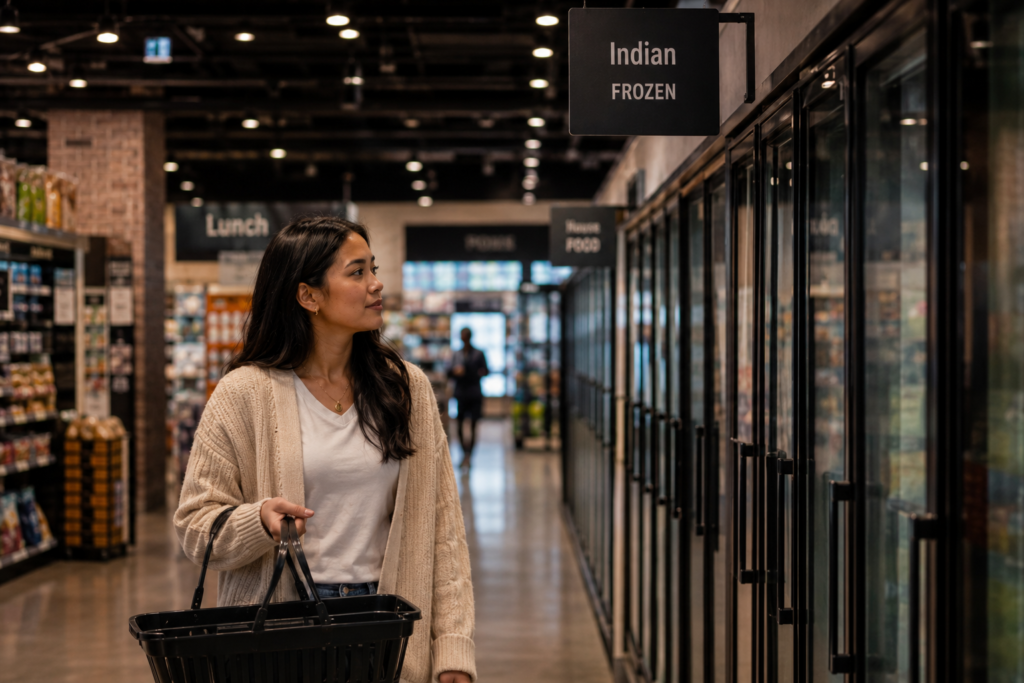
Walk into almost any Australian supermarket today and it’s easy to find frozen naan, samosas, curries, dumplings, and other international favourites sitting alongside everyday grocery staples. What was once considered specialty food has become part of the weekly shop.
Few businesses have had a closer view of that transformation than Indian Foods Group (IFG). As one of Australia’s largest distributors of Indian and Asian food products, IFG has helped bring globally recognised brands such as Haldiram’s into mainstream Australian households, making authentic Indian food more accessible than ever before.
That growth hasn’t happened by chance. Behind every product on the shelf, there are years of investment in quality, operational scale, and product development to meet the rigorous requirements of Australia’s major supermarket chains. More recently, it has also been supported by significant marketing investment, helping drive awareness while ensuring supply can keep pace with growing consumer demand.
The result is a category that has evolved from niche to mainstream, with frozen international foods now representing one of the most competitive and fastest-growing segments in supermarket freezers.
In a major milestone for both this category and Indian Foods Group, Haldiram’s Tandoori Naan and Punjabi Samosas are now nationally ranged in every Coles and Woolworths supermarket across Australia. And this is just one example of the broader transformation taking place across Australia’s multicultural food landscape.
Authenticity Has Become an Everyday Choice
Not long ago, many international food products were stocked primarily for diaspora communities looking for familiar flavours from home. Today, they’re just as likely to end up in the shopping carts of Australians discovering new cuisines for the first time.
Consumers are increasingly looking for meals that combine convenience with authenticity. Frozen naan breads, samosas, ready-to-cook curries, and other globally inspired products have become practical weeknight meal solutions rather than occasional purchases.
This reflects a broader shift in Australian food culture. International cuisines are no longer reserved for restaurant visits or specialty grocery stores; they’re becoming part of everyday eating habits across the country.
Scaling for Mainstream Retail
As demand has grown, so too have retailer expectations.
Supplying Australia’s largest supermarket chains requires far more than sourcing quality products. Businesses must consistently deliver on volume, availability, food safety, packaging standards, and supply chain reliability.
For IFG, this has meant significant investment in operational capability. The company recently tripled its warehouse capacity in Sydney while also investing in a new freezer-enabled warehouse in Melbourne, strengthening its ability to service retailers nationwide.
These investments illustrate a broader trend across FMCG: infrastructure has become a competitive advantage. The businesses best positioned for growth are those capable of matching increasing consumer demand with reliable national distribution.
Beyond the Supermarket Shelf
Consumer expectations continue to evolve beyond physical retail.
The expansion of brands such as Haldiram’s onto Amazon Australia reflects growing demand for convenient, multi-channel access to trusted products. For distributors, success increasingly depends on being able to serve consumers wherever they choose to shop.
Meeting those expectations requires supply chains that are flexible, responsive, and capable of supporting both traditional retail and rapidly growing online channels.
The Next Phase of Multicultural Food Growth
While frozen foods remain a major growth driver, the next opportunity extends beyond the freezer aisle.
As Australian consumers become more confident exploring global cuisines, the international grocery aisle is also evolving. Much like the dedicated Mexican and pasta sections that have become supermarket staples, there is growing potential to create destination aisles that encourage consumers to discover a broader range of authentic Indian and Asian products.
At the same time, freezer categories continue to present opportunities to introduce more premium Asian brands, such as Kawan, giving Australian shoppers greater access to the high-quality products that have long been trusted across Asia.
For businesses operating in this space, future growth will depend on more than expanding product ranges. It will require continuing to invest in quality, building strong retail partnerships, supporting brands through effective marketing, and maintaining the operational scale needed to consistently meet supermarket demand.
Building the Future of Australia’s Global Food Market

Australia’s multicultural food market has entered a new phase. Consumers now expect that authentic international food is readily available, consistently high quality, and easy to incorporate into everyday life.
Companies that can combine trusted global brands with the operational capability to supply national retailers at scale will be well positioned to shape the next stage of the category’s growth.
For Indian Foods Group, that means continuing to build on the momentum established in the freezer aisle while helping retailers create even broader opportunities for Australians to discover the richness of Indian and Asian cuisines across the supermarket.
As Australia’s tastes continue to evolve, the businesses investing in quality, infrastructure, and long-term partnerships will play a defining role in bringing the world’s flavours to Australian households.
To learn more about Indian Foods Group and their success, visit indianfoods.com.au. For any PR enquiries, contact pr@marketingbee.com.au.

