

What Happened With The Thailand Earthquake?
A powerful 7.7 magnitude earthquake rocked Myanmar and neighboring Thailand on Friday, causing widespread destruction and claiming more than 150 lives across both countries. The shallow earthquake, with its epicenter near Mandalay, Myanmar’s second-largest city, struck at midday local time (4:30pm AEDT) and was followed by a strong 6.4 magnitude aftershock just 11 minutes later.
Death Toll Rising
According to Myanmar’s military leader Min Aung Hlaing, at least 144 people were killed and 730 others injured in Myanmar alone. “The death toll and injuries are expected to rise,” he stated in a televised address on Friday evening.
The quake’s destructive power reached all the way to Bangkok, more than 1,000km from where it began. At least nine people lost their lives in Thailand’s capital. The worst scene unfolded at Chatuchak market, where a half-finished 30-story building came crashing down in a cloud of dust and debris. Dramatic footage showed construction workers running for their lives as the structure collapsed. Many weren’t lucky enough to escape – dozens remain trapped in the twisted metal and concrete.
Thailand’s Deputy Prime Minister Phumtham Wechayachai confirmed three workers died when the building fell, with 81 more buried inside. Seven survivors have been pulled from the rubble so far, with rescue teams working frantically through the night.
Widespread Damage in Myanmar
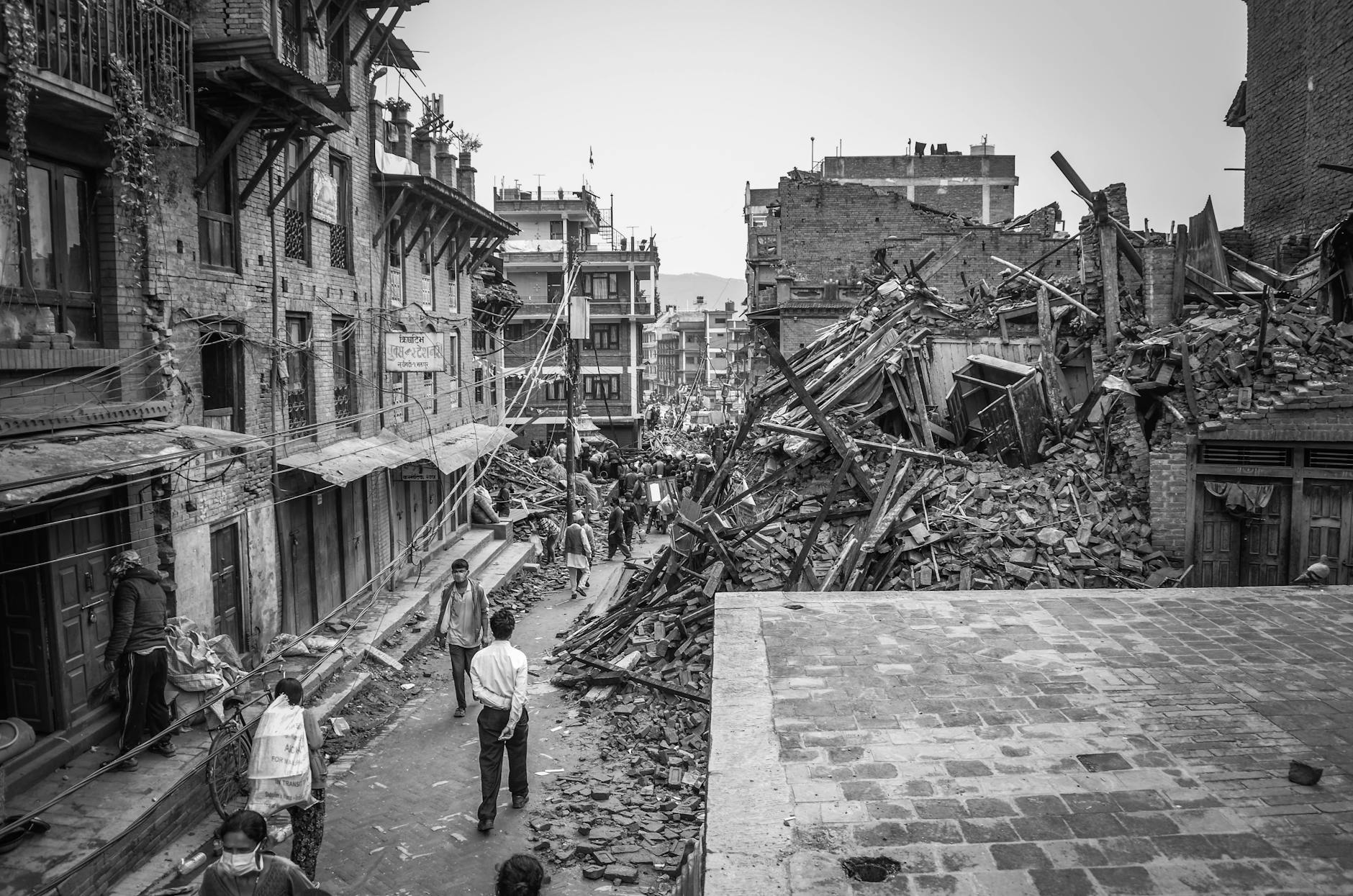
The earthquake hit Myanmar especially hard. The struggling nation, already torn apart by civil war, now faces another crisis. In the capital Naypyidaw, government buildings crumbled like sandcastles, burying people underneath. Rescue workers with dirt-streaked faces pulled bodies and survivors from the wreckage throughout the day.
Mandalay took the worst hit. The ancient Ma Soe Yane monastery, which had stood for generations, fell in seconds. A video showed monks standing frozen in shock as the monastery they called home disintegrated before their eyes. Things got worse when a nearby dam broke, flooding parts of the region. Getting around became a nightmare. The old bridge linking towns in Sagaing? Gone. The main road from Mandalay to Yangon? Cracked open like an eggshell.
Chaos in Bangkok
Bangkok got hit hard too. For most locals, this was their first earthquake. Buildings wobbled, floors rocked. People abandoned lunches and meetings, racing down emergency stairs. Tourists and shoppers poured out of malls onto packed streets.
“I just thought I was dizzy,” said April Kanichawanakul, who works in an office building in Bangkok. She and her colleagues rushed down ten flights of stairs, joining crowds gathering in the streets.
Scottish tourist Fraser Morton described the terrifying moments inside one of Bangkok’s many malls: “All of a sudden the whole building began to move. Immediately there was screaming and a lot of panic.”
Another visitor from England, Paul Vincent, witnessed water cascading from a rooftop pool as a high-rise building swayed dangerously. “There was people crying in the streets and, you know, the panic was horrendous really,” he recalled.
The Thailand Earthquake has seen the city declared a disaster zone as authorities suspended the elevated train system and subway. Traffic gridlocked the streets as people attempted to flee tall buildings.
International Response
Myanmar’s government has declared a state of emergency in six regions and states, including the capital Naypyidaw and Mandalay. A junta spokesman told AFP, “We want the international community to give humanitarian aid as soon as possible.”
The Red Cross reported that downed power lines have made it nearly impossible to reach some of the hardest-hit areas.
Aid groups paint a grim picture of what’s needed. “People are desperate for the basics – clean water, food, somewhere safe to sleep,” reported a Christian Aid worker with contacts on the ground.
Far-Reaching Impact Of The Thailand Earthquake
The scope of suffering extends far beyond Myanmar and Thailand. People felt the earth move in parts of China, India and Vietnam. Chinese state media showed injured residents in border towns being loaded into ambulances.
Myanmar sits on the Sagaing Fault, which has triggered major quakes before, but nothing has matched Friday’s devastation in recent memory. As night fell, rescue teams worked by flashlight, listening for voices under the rubble. In both countries, hospitals filled with the injured while officials struggled to count the dead and missing.
Thai Prime Minister Paetongtarn Shinawatra cut short an official visit to Phuket island to hold an “urgent meeting” about the disaster response. Meanwhile, in Myanmar, government forces battling widespread civil unrest now face the additional challenge of responding to this natural disaster in areas where they’ve lost control.
As the sun rose on Saturday, the full extent of the destruction became clearer, but many remote areas remain cut off from communication. Authorities in both countries warn that the full human toll may not be known for days.
—
For the latest on the Australian Federal Election, read our trending stories here.


