

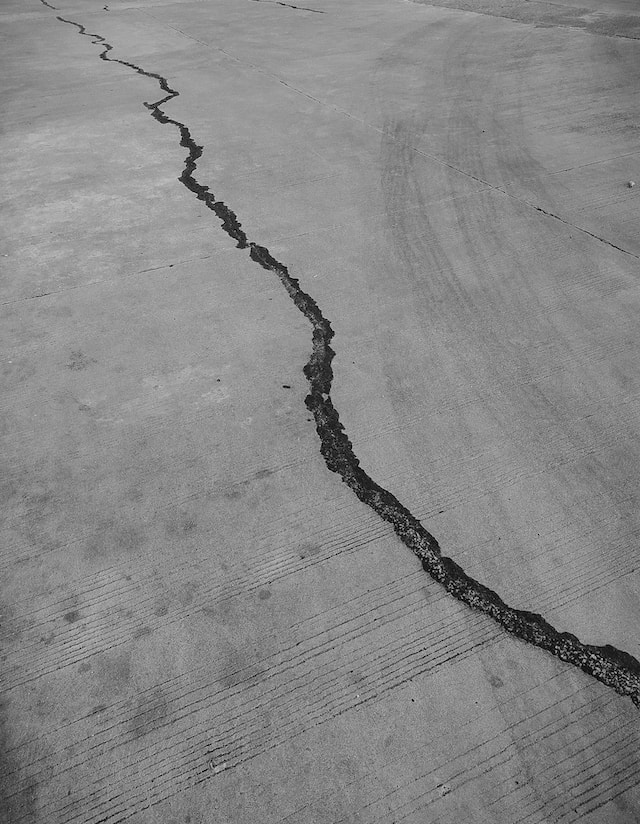
Thousands of Victorians have reported feeling tremors overnight after an earthquake and aftershock struck near the Great Ocean Road, marking the largest quake recorded in the region.
A magnitude-5.0 earthquake was recorded near Apollo Bay on the Otway Ranges coast just after 2am, and a magnitude-3.6 aftershock occurred nearby just before 6am.
Among more than 7,000 people who reported feeling the first earthquake were those in the regional city of Bendigo, many across Melbourne and some on Tasmania’s King Island.
The initial earthquake was recorded at a depth of 8 kilometres, and the aftershock at 10km.
The State Emergency Service (SES) received a couple of calls for assistance, but no injuries or serious damage have been reported.
The body said there had only been five earthquakes of magnitude-5.0 and above recorded in Victoria’s history.
The SES advised people in the case of strong aftershocks to drop to the ground, take cover under a sturdy piece of furniture like a table and to hold on until the shaking stopped.
Laurie, a resident of Burtons Lookout, south of Colac, described feeling the earthquake shake his house “violently” for at least 30 seconds.
“The whole house shook. I thought the house was lifting off its foundations — it really tossed around,” he told the ABC.
“It shook violently — the house felt like the room was lifting up.”
The earthquake is Victoria’s largest since a magnitude-5.9 event in the state’s east in 2021.
Earthquake largest recorded in Otway Ranges
Seismology Research Centre chief scientist Adam Pascale said the Otway Ranges region where the earthquake was recorded is no stranger to such events.
He said the initial quake was about 10km north of Cape Otway and 10km west of Apollo Bay.
“In the [Great] Otway National Park is obviously the Otway Ranges and all those mountains … and they have been formed by earthquakes over millions of years,” he said.
“This is the largest that we’ve observed in that particular area on record.”
He said multiple fault lines in the area had been mapped by scientists.
“There’s one basically on either side of this one so we haven’t determined which fault that it’s actually occurred on yet,” Dr Pascale said.


