

Written By Elle McClure
Theirs may look like a humble pink shampoo bottle, but what MONDAY Haircare has been able to achieve in a little over 18 months is nothing short of impressive.
First landing on the shelves of New Zealand’s biggest supermarket retailer, Foodstuffs, and Coles in Australia back in March 2020, it now sells 10,000 bottles a day (around 7 every minute) in 11 countries, with more than a dozen of the world’s biggest retailers.
The brand estimates it’s sold six million of its fully recyclable bottles in total since its inception at the beginning of last year, when it burst onto the scene with celebrity face, model Georgia Fowler, and immediately sold out in many supermarkets (the brand counted six months’ worth of stock sold in four weeks).
That initial frenzy was in part thanks to the brand’s pricing: their bottles of shampoo and conditioner sell for just $10 each, promising salon-quality haircare that’s free of common, but often undesirable, inclusions such as parabens and sodium lauryl sulfate.
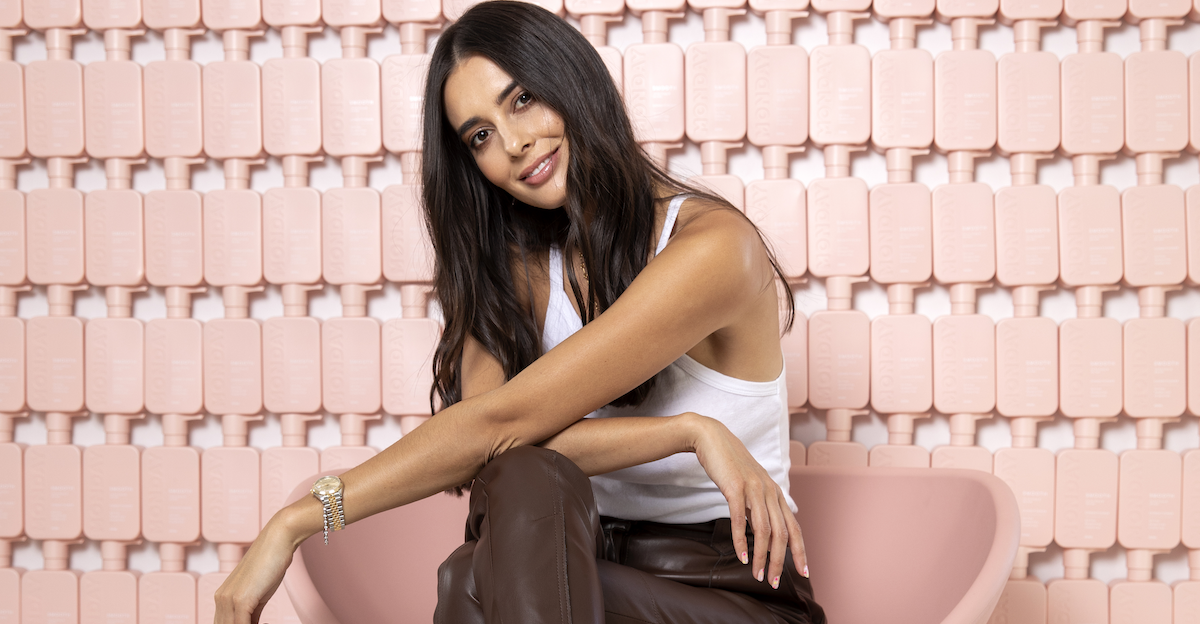
Its minimally designed, pink-hued bottles—for want of a better adjective, described as ‘millennial’ pink—were another of the brand’s calling cards.
Co-founder Jaimee Lupton says: “I saw a real gap in the market for quality haircare with those modern attributes, with a design that people actually wanted to have in their shower rather than pour into their ‘fancy’ looking bottles.”

Building brand recognition among the likes of Pantene and Schwarzkopf—supermarket shelf mainstays for the better part of the last three decades—was no easy feat.
But MONDAY quickly built an affinity beyond its Pantone shade, with a savvy social media strategy that saw it getting product in the hands of influencers and achieving virality on social media (on TikTok, #mondayhaircare has been viewed over 80 million times).
The brand has managed to achieve what few others of its price positioning do, winning several coveted beauty awards from the likes of major mastheads Cosmopolitan and Glamour in the United States.
Having engaged brand ambassadors such as celebrity hairstylist Jenna Perry (the go-to for such names as Bella Hadid and Emily Ratajkowski) and Patrick Wilson (who works with British It-girls Rosie Huntington-Whiteley, Suki Waterhouse, Jodie Comer, and Normal People’s Daisy Edgar-Jones), the brand is also building credibility in a fickle industry.
Lupton, who is currently Auckland-based, has a background in luxury publicity for the likes of Hermes, Range Rover, and Celine, but she says her thinking for the brand has more so been shaped by being acutely tapped into what existing and emerging beauty brands are doing in the beauty space.

“The beauty industry is a giant,” says Lupton of an industry predicted to reach US$463.5 billion in value by 2027, “but there’s really so many niche trends and movements at play that you have to be paying attention to.”
One of the biggest shifts she’s seen, she says, is the continued “democratisation” of the industry, with the major beauty conglomerates such as L’Oréal, Unilever, P&G and Estée Lauder seeing increased competition from smaller, independent beauty brands.
“20 years ago, the major players dominated, but there are new brands like ours coming through and shaking things up,” says Lupton.
Those brands often have a clout among younger generations that stems from their digitally native offerings, along with being acutely tapped into what young consumers are looking for in a beauty product.
“Young people are really discerning nowadays, and have so much information at their fingertips,” says Lupton. “Millennials and Gen Z would often rather try a brand that’s new and exciting and getting a lot of buzz over one that they would have seen their mum or even their older sisters using, even if it is a traditionally ‘desirable’ brand.”
In a sea of male executives deciding on beauty brand offerings for a consumer cohort that’s overwhelmingly made up of women, Lupton is also a female co-founder, and works closely with her mostly female team across every facet of the business.
Rather than selling direct-to-consumer, MONDAY exclusively sells with retail partners, leveraging their established reach with an offering that Lupton says is, “a breath of fresh air for traditional retailers.”
“MONDAY filled a need that we didn’t previously offer our customer base,” says senior category manager at Coles, Rebecca Tinnion. “It really was the first ‘Instagramable’ product to be stocked in the beauty section of a supermarket.”
MONDAY launched in North America and the United Kingdom earlier this year, seeing the brand stocked with major international players Walmart, Amazon, Costco, Kroger, CVS, Target, Tesco and Ulta Beauty.

Such retailers have made no secret of their desire to connect with Gen Z consumers, whose direct and indirect spending power was estimated at US$143 billion back in 2018.
According to a recent Gen-Z State of Beauty report by media company Kyra, eight of the top-10 skincare brands most favoured by Gen Z in 2021 were considered ‘mass’ or ‘masstige’, referring to those that present a typically ‘prestige’ offering to the masses.
Major retailers are adding brands popular on social media to their portfolios at a considerable rate, no doubt with the goal to help them tap into a millennial and Gen Z customer base.
Brands like MONDAY have the kind of buzz on social media that many traditional players can only dream of, with a special focus on TikTok, the music-driven app that’s estimated to have more Gen Z users than Instagram by the end of 2021. MONDAY lays claim to being one of the most followed haircare brands on the platform.
According to NPD Group’s 2020 Female Facial Consumer Report, Gen Z consumers use just as many products in their daily routines as Gen X, which is astounding when you consider that even the oldest Gen Zs are aged just shy of 25—and using the same number of products as their parents’ generation (those in their mid-40s to -50s).
Along with being more conscious of price and efficacy, Gen Z shoppers are also more discerning when it comes to companies’ sustainability and ethical credentials—and managing to balance those considerations as a brand is no easy feat.
Lupton says MONDAY haircare utilises a well-established, in-house manufacturing system that not only allows them to produce at scale and tightly control their margins (in order to achieve a price point that fits with younger consumer mindsets) but gives them full control over their production processes and certifications.
Head over to their website to grab yours today and see what MONDAY haircare is all about!


