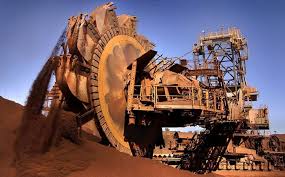
Rio Tinto’s chairman and director will resign over the demolition of two Australian Aboriginal rock shelters.
The 46,000-year-old Juukan Gorge stone shelter was demolished in a steel mine in Western Australia last year.
Public Backlash
A public and investor backlash led to the resignation of then-chief executive Jean-Sebastien Jacques and two deputies.
However, last month the salary committee of the mining giant gave all three managers a large sum of money.
Simon Thompson will step down as chairman after the annual general meeting next year, and non-executive director Michael L’Estrange will retire from the board after this year’s meetings.
“I will ultimately hold myself accountable for the failure that led to this tragic incident,” Mr Thompson said in a statement Wednesday.
Mr Thompson was under increasing pressure last month after district officials accused him of breaking his promise.
The Ancient Caves
The caves – regarded as one of Australia’s most important archaeological sites – have provided evidence of human habitation for over 46,000 years.
The fossils found in the caves include a 28,000-year-old animal skeleton and a 4,000-year-old belt made of human hair woven.
The DNA test was directly linked to the people of Puutu Kunti Kurrama and Pinikura (PKKP) – the ancient landowners.
The shelters sat above about eight million tonnes of high-grade iron ore, with an estimated value of £75m (A$132m; $96m).
In December, a parliamentary inquiry ordered Rio Tinto to rebuild the cave system, and blasted their destruction as “inexcusable”.
In its report – entitled Never Again – the investigation concluded that Rio Tinto “knew the significance of what they were destroying but blew it away anyway”.
It has made seven recommendations, including the suspension of extracting all local minerals, and changes in heritage protection laws.