

South Australian researchers are hoping to develop an easily-accessible treatment for the fastest-growing form of problem gambling: addiction to online sports betting.
The “graded exposure cue therapy” aims to reduce sensitivity to the signals the gambling industry relies upon to keep people betting.
Flinders University behavioural therapist Ben Riley wants to deliver the therapy remotely — either online or via telehealth — which would be an Australian first.
“Then it can be rolled out nationally and we want it to be made available to as many people as possible,” said Dr Riley, who is also a clinician at the Statewide Gambling Therapy Service.
The therapy has proven successful with a small group of six problem gamblers, so researchers are expanding the trial to 40 participants.
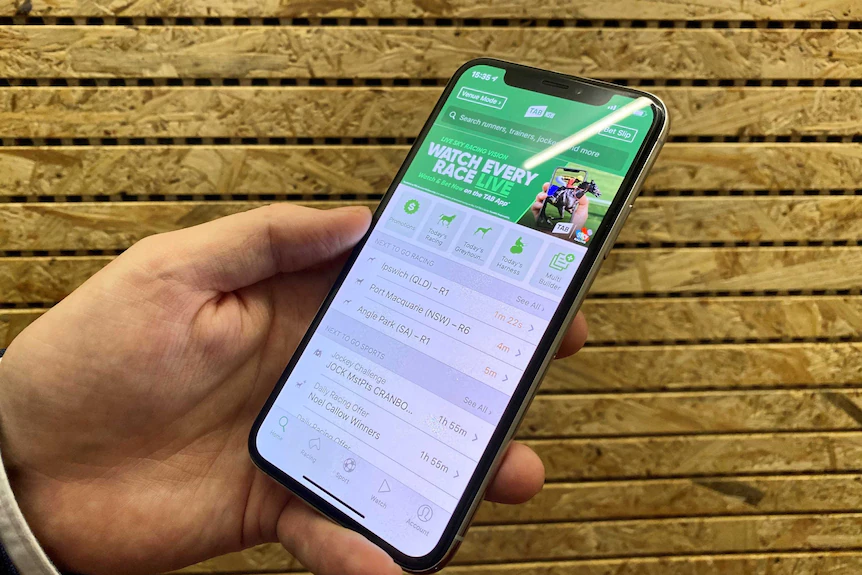
“We know that smartphone betting is the riskiest form of gambling and that’s got to do with the way that we use our smartphones,” Dr Riley said.
App-based sports betting is the fastest-growing part of the gambling industry and can provide the quickest path to addiction.
“Betting has changed,” one problem gambler said during a clinical interview that was shared — with his permission — with the ABC.
“I can do it wherever — I can do it in the toilet or in bed with my partner asleep next to me.
“When I started, you’d only go to the pub and, if you didn’t go, you didn’t bet. Nowadays, you’ve got the phone right in front of you. You don’t even need to go to the pub.
“The phone made it even more intimate because it’s my personal thing.”
‘We teach people to de-condition themselves’
Part of the therapy involves educating problem gamblers about how advertising or phone notifications are used to trigger gambling urges.
When gamblers get sent special offers or odds — or even see sports-related material on television — their arousal levels spike, making it harder for them to make rational decisions.
However, the cue-based therapy guides people to practise mindful exposure to increasing amounts of this stimulus, helping problem gamblers learn to resist the urges until they disappear.
“Essentially, what we do is we teach people to de-condition themselves to all the cues associated with gambling,” Dr Riley said.
While researchers are investigating ways to treat the problem, they also want governments to do more to prevent it.


