

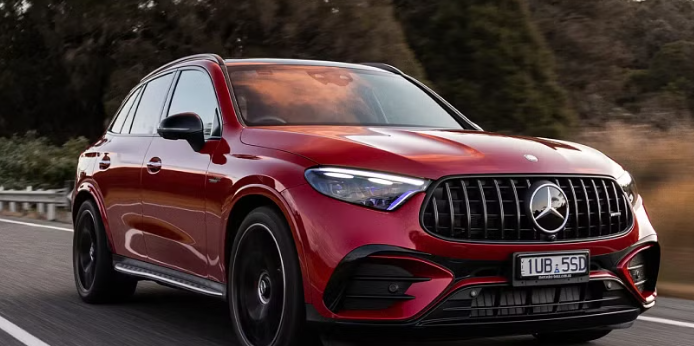
The Luxury Car Tax Australia(LCT) could be axed under returning Prime Minster Anthony Albanese. He looks to strengthen Australia’s ties with Europe amid global tariff turmoil.
LCT applies to vehicles that have a dutiable value of $80,567 or more, or $91,387 for fuel-efficient. Deemed as those with claimed fuel use of less than 7.0 litres per 100km. This at a rate of 33 per cent for every dollar above the threshold.
When was it introduced?
It was introduced in 2001 as a way to protect local vehicle manufacturing. No vehicles have been produced en masse in Australia since Ford shuttered its operations in 2016, and Holden and Toyota followed a year after.
While many models from premium brands like BMW, Audi, and Mercedes-Benz exceed the LCT threshold, despite what the name implies. The tax is also applicable to mainstream models such as the Toyota Prado, Hyundai Palisade, and Nissan Patrol. Prices have shot up over the years.
Reported by The Australian, it is claimed “a source close to the Prime Minister. The government was prepared to dump the tax in return for better access for Australia’s agricultural exports” to Europe.
The Australian report:
“Over the weekend, we got calls from the Europeans saying, ‘speed things up’,” the source said, according to The Australian.
Talk of Australia ditching the LCT has cropped up since local manufacturing wound down. Nothing of substance has materialised over the last seven years.
Using the LCT as leverage to garner “a better deal on agriculture” and a wider free-trade agreement. This according to The Australian, could finally seal the tariff’s fate.
The European Union (EU) automotive market is facing significant challenge from Chinese-made products. E
specially in the electric vehicle (EV) space – flooding the market.
With more competitive pricing and comparable technologies, European-made electric car sales are dwindling to the point where Volkswagen Group has shuttered two facilities, and Audi has closed the doors on a plant in Brussels that led to the discontinuation of the Q8 e-tron.
According to estimates, the LCT brings in around $1.2 billion of revenue for the government per year, but the majority of that figure is skewed – at least in 2018 – towards Toyota models rather than high-end metal from Ferrari, Lamborghini, and Porsche.
If the LCT is scrapped, luxury car prices are expected to come down, however the enforcement of the New Vehicle Efficiency Standard (NVES) could be a complicating factor.
More details about luxury car tax australia
Introduced earlier this year, but not enforced until July 1, NVES sets targets on carbon dioxide emissions for each vehicle sold, and requires car manufacturers to pay a penalty if exceeded on average across their model ranges.
Credits can also be earned for EV and low-emissions vehicle sales, with the cumulative balance calculated at the end of a calendar year and car brands are given about two years to settle the tally before any fines are payable.
It has been put forward by the Federal Chamber of Automotive Industries (FCAI) – the car lobbying body formed by major car brands – that NVES fines could be passed onto consumers by way of increased prices.
However, the abolishment of LCT could go some way to offsetting those increases.


