

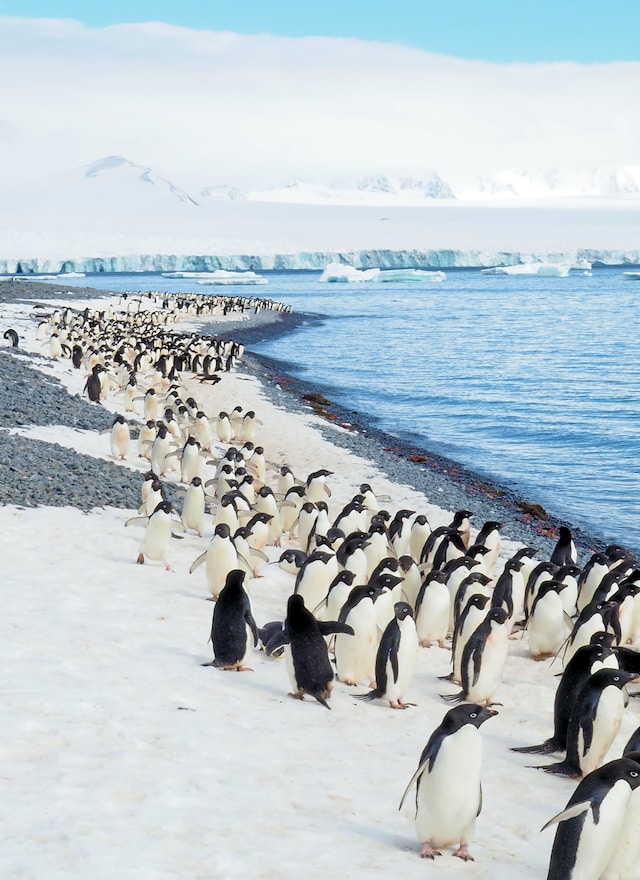
Humans generally aim to get more than seven hours of sleep a day but what if we got that seven hours by micro-sleeping thousands of times a day?
Just the thought of it can make you feel drowsy, but it’s a sleeping pattern that’s been observed in a species of penguin.
New research on nesting chinstrap penguins (Pygoscelis antarcticus) in Antarctica suggests the bird could, in one of the most extreme examples ever recorded, be incrementally gaining the benefits of longer sleep from microsleeping.
A paper in the journal Science found wild chinstrap penguins in the South Shetland Islands, between South America and Antarctica, were momentarily nodding off for four seconds 10,000 times a day.
The microsleeps added up to about 11 hours of rest a day for the penguins which take turns hunting for food and guarding their eggs and chicks from menacing predators like the brown skua.
In December 2019 researchers fitted 14 random penguins that were incubating eggs at the King George Island colony with electroencephalogram (EEG) sensors to record their brain activity.
They were also fitted with GPS trackers and pressure sensors to measure where they went and how deep they dived while out hunting.
The data, collected over 11 consecutive days, showed the penguins took turns sitting on their nests incubating eggs (for anywhere between 5.5 to 64 hours) and foraging.
Hunting birds foraged for about nine hours before taking an 11-hour break back on land and then switching with their partner at the nest.
Both incubating and non-incubating birds had more than 600 bouts of sleep an hour.
The penguins might have managed to get a minuscule amount of sleep while at sea but that could not be fully qualified.
Data from the EEG sensors revealed incubating penguins had a greater amount of bihemispheric slow-wave sleep, which is when both left and right sides of the brain are asleep for shorter periods.
Birds at the nest also spent more time in unihemispheric slow-wave sleep, which is when one side of the brain is asleep while the other remains alert.
The maximum bout of sleep recorded was 34 seconds but the majority were under 10 seconds, with an average sleep time of four seconds.
While microsleeps have been recorded in other bird species, researchers said similar sleep behaviour to the chinstrap penguins had not been seen before.
Waking up refreshed?
The restorative value of the microsleeps was not directly measured in the study but the paper suggested the breeding success of the penguins indicated they were getting quality rest.
Won Young Lee, a study co-lead author at the Korea Polar Research Institute, said microsleeps had generally been thought to be too short to be beneficial or restorative.
“So researchers did not pay much attention to it,” he said.
“Also, such sleep patterns have not been previously observed to last for days.”


