

Where do we come from? How did life frame? What started the birth of the universe? While most of us consider life’s more unremarkable questions, Curtin College’s post-doctoral inquires about individual Christene Lynch inquires the huge ones.
Dr. Lynch employments careful information and picture investigation to look for out 13-billion-year-old signals from the radio wave signature of the primary light within the universe.
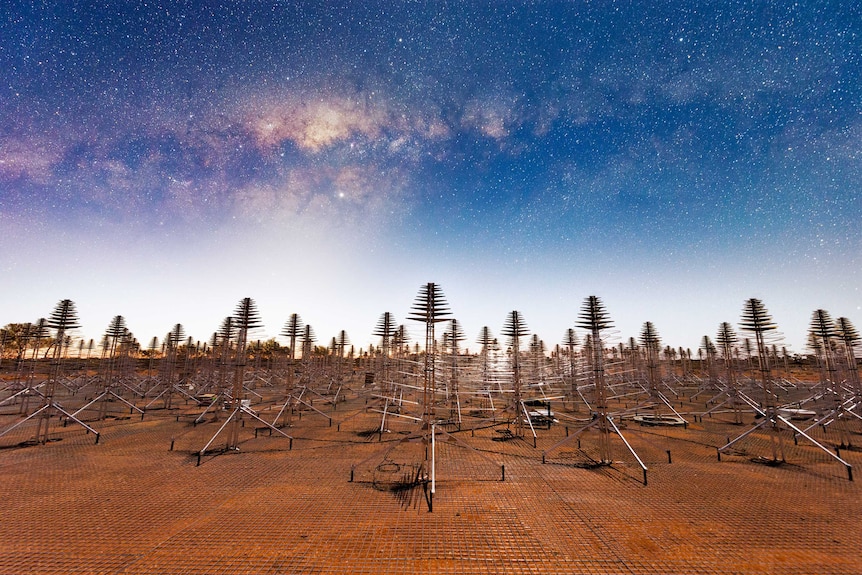
Thanks to unused innovation at the Murchison Widefield Cluster radio telescope in Western Australia’s Murchison locale, Dr. Lynch and her colleagues at the Worldwide Middle for Radio Space science Inquire about are creeping closer to finding the answers.
The recently multiplied supply of receiving wire tiles at the Murchison telescope has empowered Dr. Lynch to diminish foundation commotion and increment the chance of homing in on the black-out leftovers of ionized hydrogen particles that went with the universe’s, to begin with, light. “I utilize this telescope to undertake to detect signals from the primary stars and worlds in our universe,” she said.
“We have models of these objects, but we do not truly have estimations or perceptions of these objects. “That’s since it’s truly difficult to watch them — the signals from them are exceptionally blackout additionally there is a part of other brighter radio objects within the sky.
“We need to unravel the flag that we need from these first stars and universes, from all of these other systems and stars within the universe.” Dr. Lynch has fairly discharged a logical paper sketching out the work within the Distributions of the Cosmic Society of Australia.
Why bother endeavoring to discover signs of the universe’s, to begin with, the light? “It’s an essential address of where did we come from,” Dr. Lynch said. “Where did the primary galaxies, the primary objects within the universe come from? How did they shape and after that how did that impact everything that came after — counting us?
“Most of the hypotheses are fair based on essential material science — what we think ought to happen. “But there may be other variables that we haven’t thought of, a few introductory conditions that we haven’t thought of that may be diverse than what the scholars think happened. “So yes, this is often a huge question. “I do not regularly think in that kind of huge scope — my work is exceptionally centered on this little issue.


