

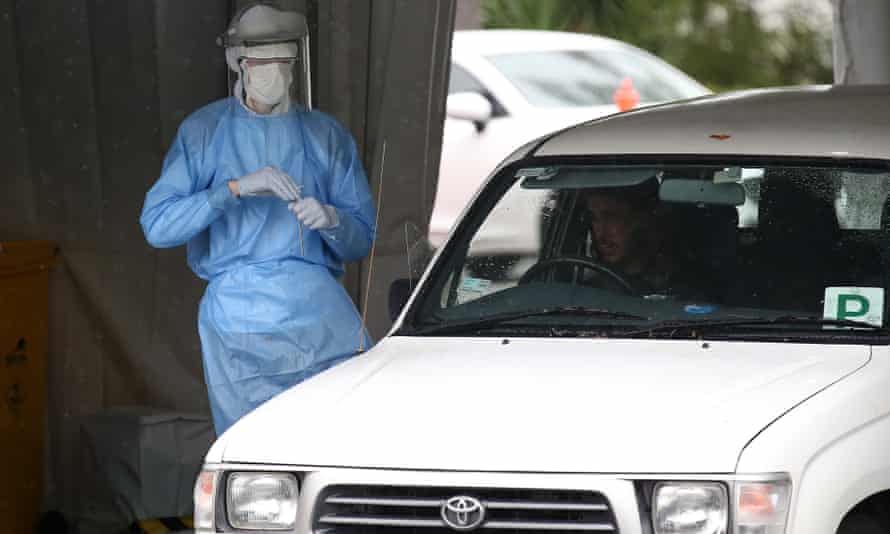
The Australian city of Brisbane came out of a three-day closure on Thursday after a single Covid-19 case was reported the day before.
The outbreak of the Queensland capital – home to two million inhabitants – has grown to a total of 16 diseases.
The provincial premier Annastacia Palaszczuk said the low number of new infections meant the closure could be removed in time for the Easter holiday weekend.
Other restrictions still apply, including the wearing of masks in indoor areas.
Gathering numbers are limited to 30 people at home, while church services will be able to be fully operational if people sit down and have tickets.
Not Out Of The Woods Yet
“This is really important that we are doing this for the next two weeks because we are not out of the woods yet,” said Ms Palaszczuk.
In Australia – where infection is very low – snap closure has been shown to be an effective health treatment to help prevent early outbreaks. But the unexpected closure has also left an economic effect, experts say.
Ms Palaszczuk noted the impact of sudden closures on businesses, but said “the consequences of not doing things are much worse”.
“You have to see what is happening around the world,” she said, referring to diseases in France and the United States. “We don’t want to see that here.”
Vaccine Roll Out
The government began its immunization program in February, but was below 85% to its goal of target in March.
The numbers have told Australia’s Covid-19 relative success story clearly: fewer than 1,000 deaths and 30,000 cases since the pandemic began. That’s a fraction of the figures in most EU nations or the US.
Yet the numbers are telling the opposite story when it comes to Australia’s vaccine rollout.
Just 700,000 doses of a four million target delivered by April. It’s hard to see how the government will fulfil a promised six million inoculations by May.
There’s been a great deal of mixed messages and lack of transparency. While the federal government insists that all is going smoothly, it has accused the states of “sitting on the vaccines” and not distributing them.
State governments have fought back, raising concerns about future supplies. The whole issue has been jolted into urgency by Brisbane’s outbreak, with questions over why two health workers in the latest clusters had not been vaccinated.


