

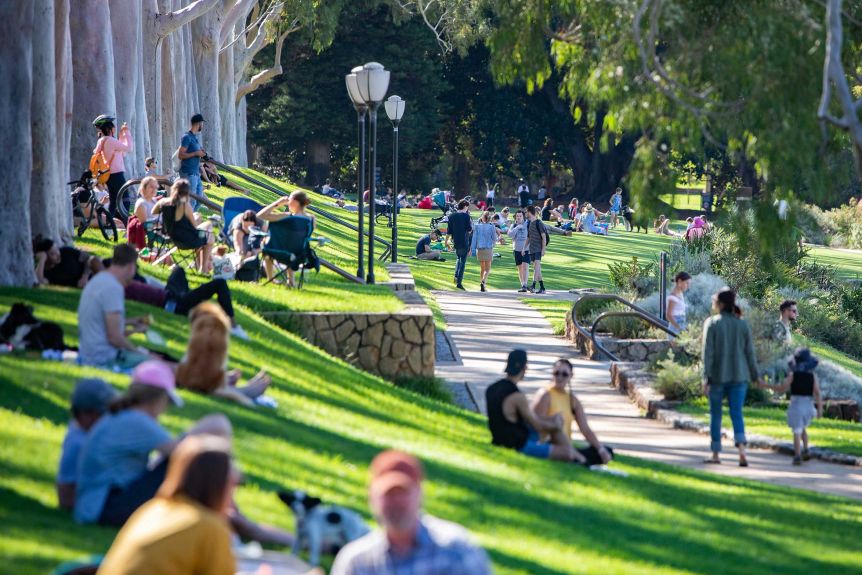
Authorities in Sydney have extended Covid bans at public gatherings throughout Christmas to curb the disease in Australia’s largest city.
Most Sudneysiders will continue to be able to have ten older guests at their homes during the holidays.
But in a slight relaxation of rules, young children can be included on top of that number between 24-26 December.
Number Of COVID Cases
Sydney saw only eight new cases on Wednesday, raising hopes of efforts to curb the disease.
The New South Wales (NSW) government has said a total of 98 cases have been received in the capital since last week.
More than 124,000 residents had only been tested in the past three days – a local record.
Almost no relocated cases have been reported elsewhere in Australia in recent days.
The Restrictions
The disease was diagnosed last week in the northern coastal region of the city, which led to the immediate closure of residents.
However, Premier Gladys Berejiklian said officials were still unable to determine how the virus had spread to the community and that its closure would continue until Sunday.
“We want to make sure that there aren’t strains or lines of community transmission that we haven’t found yet,” she said on Wednesday.
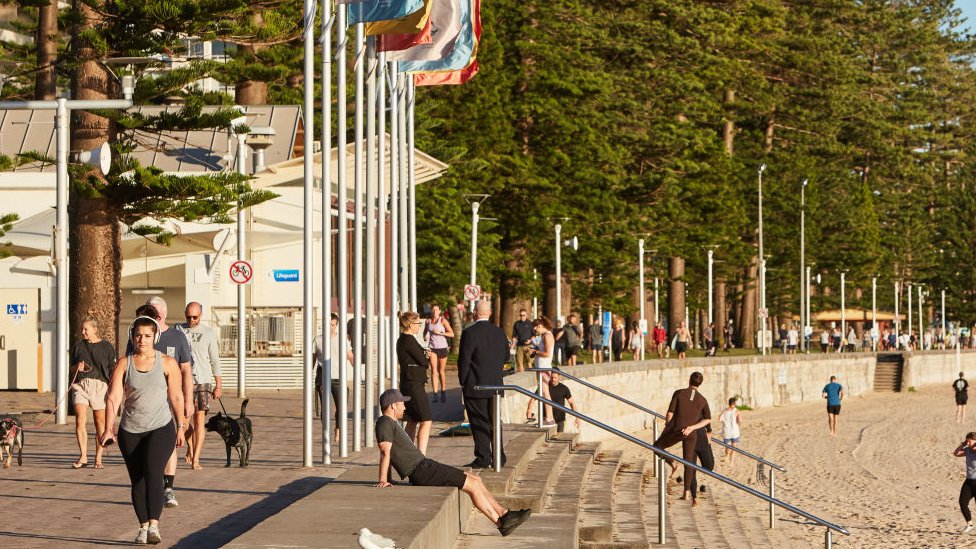
She indicated that the southern part of the community would be allowed to receive ten visitors for Christmas. In the northern part – where the outbreak began – only five tourists will be allowed.
But residents in both areas were still barred from leaving their neighborhood, she added.
Sydney residents have been told not to visit nursing homes for Christmas and to wear masks in public places.
They were also barred from traveling to other states and areas, blocking holiday programs for many families, following restrictions imposed earlier this week.
Elsewhere In Australia
Queensland, a neighboring country north of NSW, said it had turned more than 120 people who had been trying to cross the border since Tuesday.
Ms Berejiklian criticized neighboring countries for what she described as a “unequal” response to the outbreak in the state capital.
Some NSW areas – such as regional cities – remain unaffected but some provinces, such as Western Australia, have banned all NSW residents.
“At NSW, we are not only aware of how we operate, but I think we are assessing the risk well and making decisions based on that, unlike some of my government colleagues who have taken what I think are extremist acts,” said Ms Berejiklian. .
Australia has been known for its quick and aggressive response to this year’s outbreak. Governments have taken immediate action to close the hotspots and conduct rapid detection and testing.
The country has so far recorded 908 deaths and 28,227 cases in total – a much lower rate than in many other countries.
It has taken early decisions to close national borders and authorize the segregation of hotels for travelers returning.
The breakdown of the hotel segmentation system remains a major source of the virus – as seen in previous outbreaks in Melbourne and Adelaide.
It is also believed to be the source of the Sydney outbreak, although officials reiterated on Wednesday that they did not know how to enter the community.
Most of the people returning to Australia flew to Sydney, meaning that the city now has more hotels than ever before.


